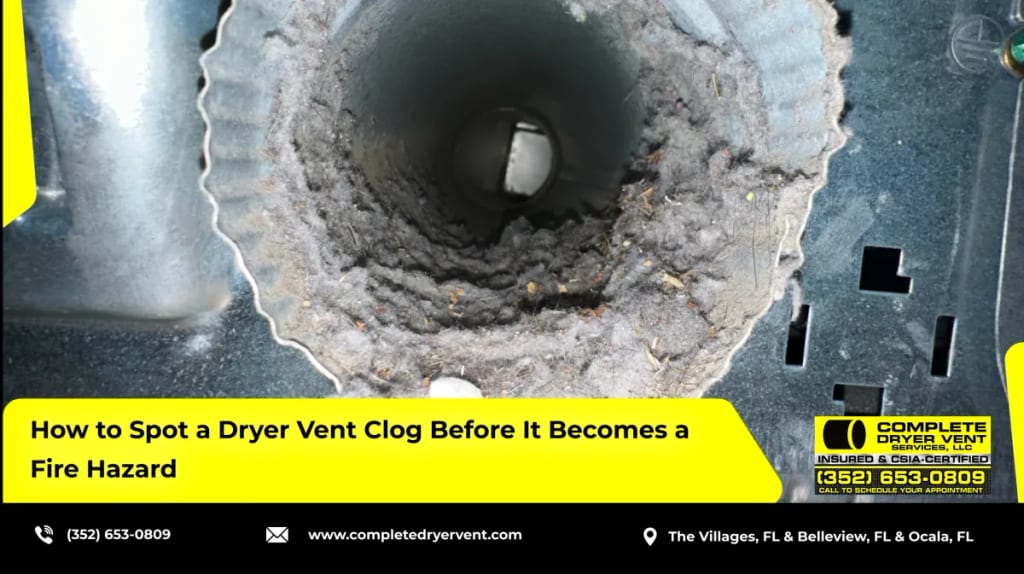

The Science of Airflow on How Backpressure From Vents Destroys Your Dryer
The most immediate clogged dryer vent symptoms include clothes taking longer than 45 minutes to dry, a dryer cabinet that feels dangerously hot to the touch, and a faint burning odor in your laundry room. Ignoring these warning signs restricts airflow and creates dangerous backpressure. This oversight ruins expensive appliances and poses a severe fire hazard. By recognizing these red flags early, you can prevent structural damage, lower your energy bills, and keep your home safe.
Every year, thousands of homeowners face devastating property loss due to a simple oversight: a dusty exhaust duct. Many assume their machine is just “getting old,” completely unaware of the highly combustible blockage hiding inside their walls.
📌 Key Takeaways
-
Identify the signs: Extended drying times and a hot-to-the-touch appliance are the top indicators of a restricted vent.
-
Understand the risk: Lint is highly combustible; trapped heat combined with blocked exhaust is the leading cause of dryer fires.
-
Save money immediately: Clearing a clogged vent can save up to $30 a month in wasted electricity or gas.
-
Ditch the DIY kits: Hardware store brushes frequently detach inside walls or compact the lint into a solid plug.
-
Trust the science: Professional technicians measure static pressure and use pneumatic tools to restore factory-level airflow.
Table of Contents
-
The Physics of Airflow and Backpressure
-
5 Critical Clogged Dryer Vent Symptoms
-
The Hidden Financial Impact
-
Why DIY Cleaning Kits Often Fail
-
The Professional Restoration Process
-
Frequently Asked Questions (FAQ)
-
Conclusion & Next Steps
The Physics of Airflow and Backpressure
Quick Answer: A dryer functions by forcing hot air through damp clothes to evaporate moisture. When lint blocks the exhaust path, backpressure forces this hot, damp air to stagnate inside the machine, causing overheating and potential part failure.
To understand clogged dryer vent symptoms, you must first understand the basic thermodynamics of your appliance. A dryer is essentially a high-powered heater combined with a heavy-duty blower motor.
It forces hot air through a tumbling drum to evaporate moisture from your wet laundry. This moisture-laden air, filled with tiny, highly flammable fabric fibers known as lint, must be rapidly exhausted to the outside of your home.
When the vent path is restricted, a dangerous phenomenon called “backpressure” occurs. The blower motor struggles against the blockage, creating a cycle of severe inefficiency.
💡 Expert Insight: A healthy, unobstructed dryer should vent approximately 150 to 200 cubic feet of air per minute (CFM). When we measure a blocked system using a digital anemometer, that number often plummets below 50 CFM.
Heat Stagnation and Thermostat Failure
Because the hot air cannot escape, heat stagnates inside the drum and the cabinet. This forces the internal safety thermostats, known as high-limit thermostats, to trip repeatedly. Over time, these thermal fuses burn out completely, requiring an expensive repair just to get the machine running again.
The Condensation Trap
Moist air that cannot escape eventually cools inside the dark vent pipe. This turns the airborne lint into a thick, wet paste that sticks aggressively to the duct walls. Over months and years, this paste dries and hardens. It acts like plaque in an artery, slowly narrowing a standard 4-inch duct down to a 1-inch opening.

5 Critical Clogged Dryer Vent Symptoms
Quick Answer: The top five symptoms of a clogged dryer vent are extended drying times, a scorching hot exterior, a burning smell, visible lint debris at the outside hood, and excessive humidity in the laundry area.
Knowing what to look for is your first line of defense. If you notice any of these five warning signs, it is time to halt laundry operations and inspect your system.
1. Increased Drying Times (The “Double Cycle” Trap)
The most common of all clogged dryer vent symptoms is the need to run multiple cycles for a single load of laundry. Modern dryers are highly efficient. A standard load of towels or jeans should dry completely in 45 to 60 minutes.
If your clothes are still damp after a full hour, the air simply isn’t moving. Your clothes are essentially sitting in a humid steam room rather than a drying chamber.
2. Unusual Heat on the Dryer Exterior
Does the top of your dryer feel like a hot stove when it is running? This is a massive red flag. Dryers are designed to exhaust heat out of the building.
If the metal cabinet is hot to the touch, the heat is backing up. This trapped heat routinely melts internal wiring and destroys the sensitive electronic motherboards in modern “smart” appliances.
3. The “Burning” Odor
If you smell something singed or burning, turn off the dryer immediately. This is the most dangerous of all clogged dryer vent symptoms. Lint is highly combustible, often used by survivalists as a fire starter.
When lint accumulates near the heating element or the gas burner housing, it easily ignites. A burning smell is often the final warning you receive before a catastrophic lint fire erupts inside your wall cavity.
📊 Data Point: According to the U.S. Fire Administration, clothes dryers are involved in over 13,800 home structure fires annually. The leading cause (34%) of these fires is a failure to clean the dryer and its venting system.
4. Large Debris at the Outdoor Exit
Walk outside and check your exterior vent hood, usually located on the side of your house or up on the roof. Do you see lint poking out of the plastic or metal slats?
Are the flapper valves stuck in a permanent “open” position due to debris buildup? If large clumps of lint are making it all the way to the exterior exit, you can guarantee the internal ducting is heavily coated.
5. Humidity in the Laundry Room
If your laundry room feels unusually humid, or if you notice condensation “sweating” on the windows during a cycle, you have a problem. Your vent may be physically disconnected behind the wall, or it is completely blocked.
Venting hot, humid air into your home’s interior framing leads to secondary disasters, such as toxic black mold growth behind your drywall.
The Hidden Financial Impact
Quick Answer: A restricted vent forces your dryer to run longer and hotter, doubling your energy consumption and causing premature failure of expensive internal components like belts, bearings, and heating elements.
Ignoring clogged dryer vent symptoms isn’t just a severe safety risk; it is a massive drain on your household budget. The financial toll of a blocked exhaust system compounds quickly.
Wasted Electricity and Gas
Running two cycles instead of one doubles your energy consumption for that specific load. Depending on local utility rates, a heavily restricted vent can add $30 to $50 to your monthly electric or gas bill. Over a year, you are wasting hundreds of dollars just to dry your clothes inefficiently.
Premature Appliance Death
Dryers that run hot constantly suffer from severe “heat stress”. This extreme temperature degrades the rubber drive belts, dries out the drum bearings, and burns out heating elements years before their time.
Replacing a heating element can cost upwards of $300. By investing in routine maintenance, you extend the lifespan of your appliance by several years.
✅ Quick Tip: To maximize efficiency, clean the lint screen inside your dryer drum before every single load. Even a slight film on the screen can reduce airflow by up to 30%.
Why DIY Cleaning Kits Often Fail
Quick Answer: Consumer-grade DIY brush kits are often too weak for long duct runs. They frequently snap off inside the wall or push lint further down the pipe, creating an impenetrable plug.
When faced with clogged dryer vent symptoms, many homeowners immediately head to the hardware store for a $20 drill-attachment cleaning kit. While these might work for a 3-foot straight pipe, they fail miserably in real-world residential ductwork.
The “Snake” Disaster
DIY fiberglass rods are often made of cheap, brittle plastic. When navigating 90-degree elbows inside a wall, they easily snap. This leaves a brush head permanently lodged in your ductwork, creating an obstruction that often requires cutting into your drywall to retrieve.
Compacting the Blockage
Without high-powered negative air pressure, spinning a brush inside a pipe often just pushes the lint further down the line. You inadvertently create a dense, compacted “plug” of lint that blocks the airflow entirely.
⚠️ Common Mistake: Never use a standard household shop-vacuum to clean a long dryer vent. A shop-vac does not have the static “lift” required to pull heavy, wet lint up a vertical 15-foot stack to a roof vent.

The Professional Restoration Process
Quick Answer: Professional technicians use digital diagnostics, mechanical reverse-spinning agitation, and high-volume HEPA extraction to safely remove every trace of lint and restore factory-spec airflow.
When you book a service with Complete Dryer Vent, you are not just getting a basic cleaning; you are getting a complete ventilation system restoration. We address clogged dryer vent symptoms using a proven, scientific approach.
Step-by-Step System Restoration
-
System Diagnostic: We start by testing the dryer’s backpressure and measuring the baseline airflow velocity.
-
Component Cleaning: We clean the internal lint trap housing inside the machine itself, a critical area that DIYers almost always overlook.
-
Mechanical Agitation: We use specialized, flexible pneumatic lines with reverse-spinning air whips to gently but forcefully break loose “baked-on” lint from the duct walls.
-
High-Volume Extraction: Our industrial, truck-mounted or HEPA-filtered vacuums ensure the lint is safely removed from your home, rather than blown into your attic or yard.
-
Final Verification: We re-test the airflow with an anemometer to guarantee your dryer is running safely at factory-spec efficiency.
Frequently Asked Questions (FAQ)
What are the first clogged dryer vent symptoms I should look for?
The earliest warning signs are usually longer drying times and clothes that feel unusually hot to the touch at the end of a cycle. If a normal load takes more than 50 minutes to dry, your vent is likely beginning to restrict airflow.
How often should a residential dryer vent be cleaned?
Industry standards and fire safety experts recommend having your dryer vent professionally inspected and cleaned at least once every 12 months. Homes with large families, multiple pets, or complex duct routing may require service every 6 to 8 months.
Can a clogged dryer vent cause carbon monoxide poisoning?
Yes, if you use a gas-powered dryer. Gas dryers vent combustion gases, including carbon monoxide, alongside the lint and moisture. If the vent is blocked, these deadly, odorless gases can back up into your living space.
Will cleaning my dryer vent lower my electric bill?
Absolutely. A restricted vent forces your machine to run twice as long to dry a single load. Restoring optimal airflow drastically reduces cycle times, which can save you up to $500 a year in wasted energy costs.
Why does my laundry room smell like a campfire?
A burning or campfire-like odor is one of the most severe clogged dryer vent symptoms. It means lint has bypassed the trap, accumulated near the internal heating element, and is beginning to singe. Turn off the dryer immediately and call a professional.
Conclusion & Next Steps
Identifying and acting upon clogged dryer vent symptoms is the absolute best way to maintain a safe, highly efficient home. Whether you are dealing with a faint burning smell, a machine that is hot to the touch, or drying cycles that take hours, these signs are your appliance’s way of asking for immediate help. Ignoring them leads to wasted electricity, ruined machines, and life-threatening structure fires.
At Complete Dryer Vent, we possess the specialized tools, the deep niche expertise, and the commitment to safety required to protect your property. Don’t let lint dictate your safety.
Take action today to protect your home:
-
Check the exterior vent flap while your dryer is running to feel for strong airflow.
-
Time your next load of laundry—if it takes over 50 minutes, you have a blockage.
-
Call the experts at Complete Dryer Vent to schedule a comprehensive airflow diagnostic.
Click Here to Schedule Your Professional Dryer Vent Inspection