
The Florida Homeowner’s Guide to Dryer Vent Safety & Efficiency
In the Sunshine State, we balance high heat, extreme humidity, and salt-laden air. While we often focus on our AC units to keep us comfortable, there is one critical system that is frequently neglected until it becomes a fire hazard: the dryer vent.
In Florida, dryer vent maintenance isn’t just about removing fluff; it’s about managing the physics of moisture. When the 90% outdoor humidity meets the hot, moist exhaust from your dryer, the results can be catastrophic for your appliance, your energy bill, and your home’s safety.
The Humidity Trap: How Florida Weather Clogs Vents Faster
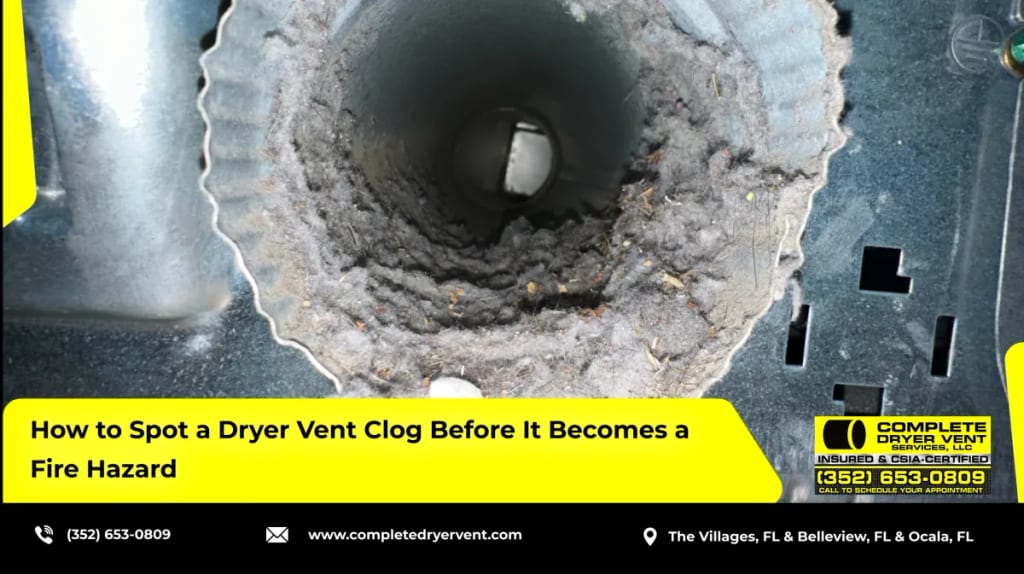
In drier states, lint is light and airy. In Florida, lint acts differently. As moist air travels through your vent, the high ambient humidity causes lint to dampen and stick to the interior walls of the ductwork. This creates a thick, “paste-like” buildup that hardens over time.
-
Reduced Airflow: This “lint paste” narrows the diameter of your vent, forcing your dryer to work twice as hard.
-
Overheating: When air can’t escape, the internal temperature of the dryer skyrockets, often tripping the thermal fuse or, worse, igniting the lint buildup.
-
Mold Risks: Trapped moisture in a dark, warm vent is a recipe for mold growth, which can eventually seep into your laundry room walls.
Salt Air and Coastal Corrosion
For homes near the Gulf or the Atlantic, salt-air corrosion is a silent killer of dryer vent systems. Standard plastic or cheap metal exterior vent hoods can become brittle or corroded, causing the “flapper” to stick open or shut.
-
Stuck Open: Allows pests (geckos, bees, or rodents) to nest in your vent.
-
Stuck Shut: Completely blocks exhaust, leading to an immediate fire risk.
Hurricane Season and Vent Integrity
Florida’s storm season brings more than just rain; it brings wind-driven debris. After a major storm, it is common for exterior vent terminations to be crushed or clogged with leaves and mulch. A professional dryer vent inspection is a critical post-storm task to ensure your exhaust path remains clear.
Warning Signs Your Florida Dryer Vent is Compromised
If you notice any of the following, your home may be at risk:
-
Extended Dry Times: If a load of towels takes more than one cycle to dry.
-
Excessive Heat: The top of the dryer or the laundry room feels uncomfortably hot.
-
Musty Smells: A sign that damp lint is sitting in the line and beginning to grow mold.
-
Visible Lint: Debris accumulating around the exterior vent opening on the side of your house.
Why Professional Cleaning Outperforms DIY in Florida
Many homeowners attempt to use “drill-powered” DIY kits. In Florida’s humid environment, these brushes often just “smear” the damp lint against the walls of the pipe or get stuck in the heavy buildup.
Complete Dryer Vent Cleaning utilizes industrial-grade HEPA-filtered vacuums and high-pressure compressed air tools to completely clear the line, restoring full dryer vent airflow. We don’t just move the lint; we remove the hazard.