
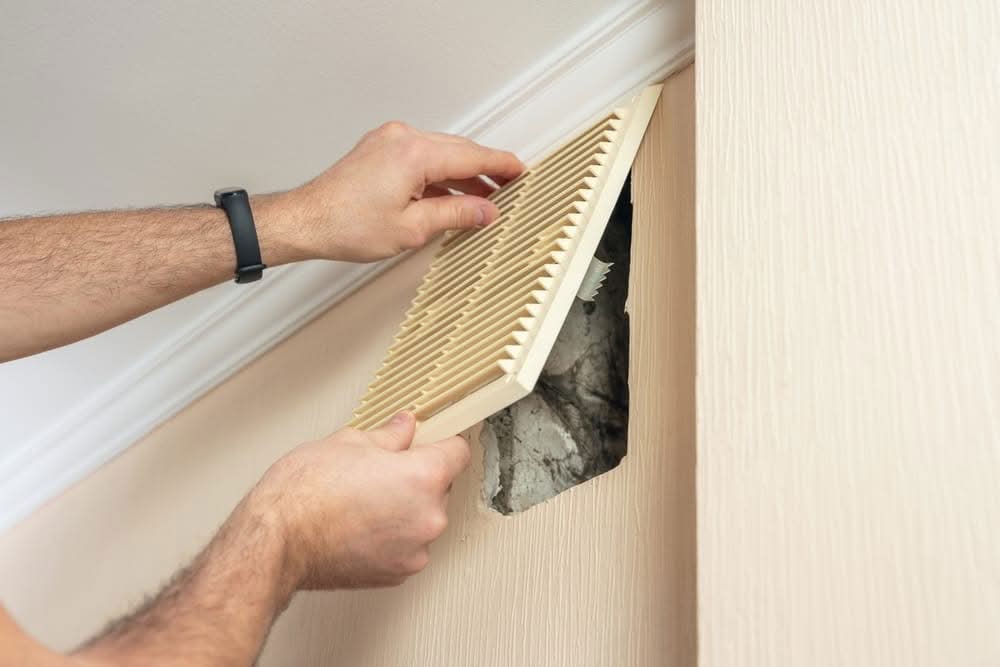
Why They Often Make Clogs Worse
DIY vent cleaning kits are often counterproductive because they lack the industrial suction required to extract debris, leading to “lint dams” at duct elbows. These retail kits frequently suffer from mechanical failures, such as snapped plastic rods stuck inside walls, which transform a simple maintenance task into a costly $500+ drywall repair and a severe fire hazard.
In the modern age of home maintenance, the “Do-It-Yourself” spirit is a point of pride. From painting a guest room to fixing a leaky faucet, the satisfaction of a job well done is undeniable. However, when it comes to the safety of your home’s infrastructure, not all projects are created equal.
One of the most dangerous areas to cut corners is your dryer exhaust system. While homeowners turn to DIY vent cleaning kits to save money, the reality is these kits are often ineffective at best and catastrophic at worst.
Key Takeaways
The Snowplow Effect: DIY brushes push lint into tight turns, creating dense, air-tight blockages.
Mechanical Fragility: Cheap plastic rods often snap when navigating 90-degree elbows in the wall.
False Security: Kits cannot identify illegal venting materials (like vinyl) or structural damage.
Incomplete Extraction: Brushing loosens lint, but without a high-CFM vacuum, that lint stays in the pipe.
Professional ROI: Expert cleaning includes airflow diagnostics and video inspections that a kit cannot provide.
Table of Contents
The Anatomy of a DIY Kit
The “Snowplow” Effect: Creating Lint Dams
Mechanical Failure: Snapped Rods and Wall Repairs
The Hidden Risks: What a Kit Can’t See
Professional Pneumatic vs. DIY Mechanical Cleaning
Frequently Asked Questions
Most retail DIY vent cleaning kits consist of threaded plastic rods and a nylon brush. While marketed for all homes, they are engineered for short, straight, rigid metal ducts and often fail in the complex, multi-turn venting systems found in modern architecture.
The marketing for these kits is persuasive: “Save $150 on professional cleaning!” To the average homeowner, it looks like a straightforward task.
Why Material Quality Matters
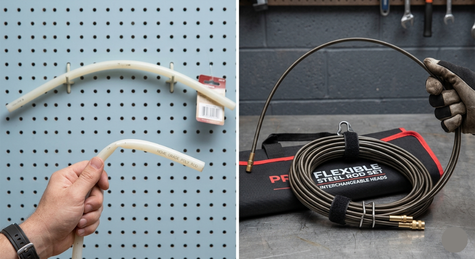
The rods in a $30 kit are typically made of high-density polyethylene (HDPE). While flexible, they have a low “torsional break point.” When attached to a high-speed drill and forced around a corner, the plastic heats up and weakens.
In the field, we call these “noodle rods”. They are great for a 4-foot straight run, but once you hit the 10-foot mark, the rod begins to whip inside the pipe, potentially tearing the duct joints apart.
Without industrial-grade suction, a brush simply “snowplows” lint forward. This loose debris accumulates at the next 90-degree turn, creating a “lint dam” that chokes airflow and causes the dryer’s thermal fuse to blow.
The primary goal of cleaning a vent is to extract lint, not just move it. This is the fundamental truth about DIY vent cleaning kits: they often create “lint dams.”
The Physics of Airflow Restriction
Imagine a snowplow clearing a street but never picking up the snow. It eventually creates a massive pile at the end of the block. This is exactly what happens inside your vent.
A “lint dam” at a 90-degree elbow can reduce airflow by 60% or more, forcing your dryer’s internal heating element to run at temperatures exceeding 160°F, significantly increasing fire risk.
If your dryer takes longer to dry clothes after you used a DIY kit, you likely have a lint dam. Stop using the dryer immediately to prevent motor burnout.
Snapped rods are the most common “emergency” call-out for professionals. When a DIY rod breaks 15 feet inside a wall, it usually requires cutting through drywall or dismantling attic ductwork to retrieve it.
Beyond making clogs worse, DIY vent cleaning kits are notorious for mechanical failure.
The “Snap and Trap” Scenario
Imagine you are deep into your vent line, and suddenly the resistance disappears. You pull the rods back out, only to find the brush head is missing.
Trying to “fish” out a broken rod with a coat hanger. This often pushes the broken piece deeper or punctures the duct, leading to a much more expensive repair.
A brush doesn’t have eyes. It cannot detect illegal vinyl venting, bird nests, or disconnected joints in the attic—”silent killers” that a CSIA-certified professional identifies instantly.
Identification of Illegal Materials
Many older homes use improper venting materials that are “tinderboxes” for fires:
Vinyl/Plastic Tubing: Highly flammable and illegal by modern building codes.
Mylar/Foil Hoses: These trap lint easily and can collapse, causing immediate heat backup.
We often find bird nests that are so dense a DIY brush just pokes a hole through them rather than removing them. This leaves the blockage largely intact while giving the homeowner a false sense of security.
While a kit costs $30, the “Total Cost of Ownership” for DIY is often higher due to energy waste, reduced appliance life, and the risk of repair bills.
Financial Impact of Vent Status
| Factor | Clogged/DIY Clean | Professional Cleaned Vent |
| Drying Time | 60-90 Minutes | 35-45 Minutes |
| Energy Cost | High (+$25/mo) | Optimized |
| Dryer Lifespan | 5-7 Years | 12-15 Years |
| Fire Risk | Elevated | Minimal |
| Tool Integrity | Prone to Snapping | Industrial Grade |
Can I use a shop-vac with a DIY vent cleaning kit?
While a shop-vac is better than nothing, it lacks the CFM (Cubic Feet per Minute) and static pressure of an industrial HEPA vacuum. It will likely leave the finest, most flammable dust behind.
What should I do if my DIY rod snaps in the wall?
Stop immediately. Do not run the dryer, as the plastic rod itself can melt or catch fire. Contact a professional dryer vent cleaning specialist who has “retrieval hooks” and fiber-optic cameras.
Why do pros use air instead of just brushes?
Professionals use pneumatic cleaning (compressed air). We feed a “skipper line” that jets the lint backward toward the vacuum. This ensures the lint is extracted from the home rather than pushed deeper into the pipe.
Are all DIY vent cleaning kits the same?
No, but most retail kits use similar threaded plastic designs. “Professional grade” rods used by specialists are typically made of button-lock fiberglass or steel-core composites that do not unscrew inside the duct.
How do I know my vent is actually clean?
The only way to be 100% sure is through a post-cleaning video inspection. A professional will show you the “bare metal” of your ductwork on a screen—something a DIY kit simply cannot do.
While the DIY movement is great for painting or gardening, your home’s fire safety shouldn’t be an experiment. The truth about DIY vent cleaning kits is that they provide a false sense of security while often exacerbating the very problem they claim to fix.
Your Safety Checklist:
Skip the hardware store kit: The risk of a snapped rod exceeds the $150 savings.
Verify the technician: Ensure they use HEPA-filtered extraction.
Ask for the “After” photo: A true pro will show you the clear line.
Ready to ensure your home is safe? Don’t settle for a hardware store fix. Contact the experts at Complete Dryer Vent Cleaning today to schedule a professional diagnostic and cleaning. Protect your home and your peace of mind with the pros.

