
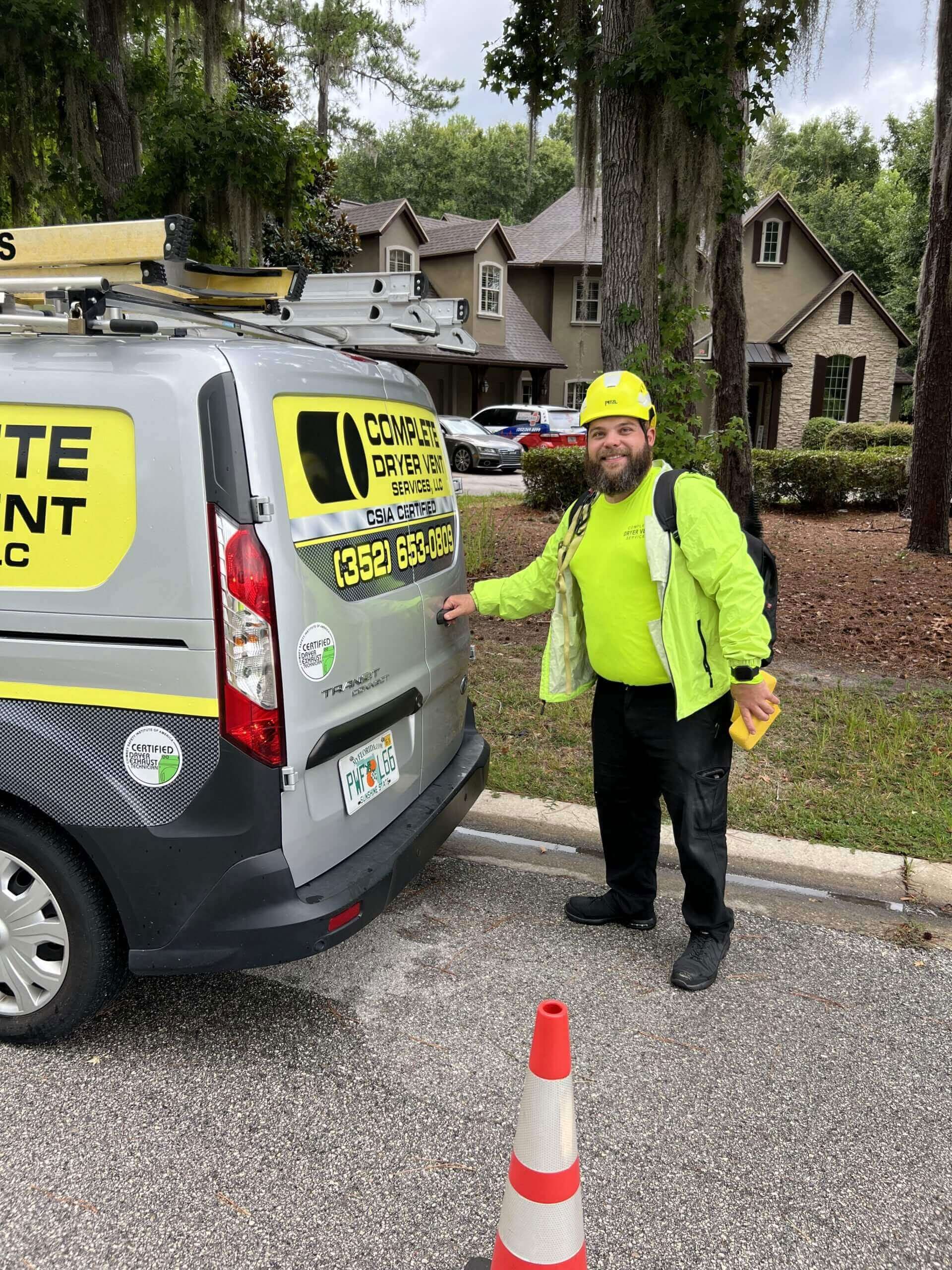
Serving Marion & Lake Counties
A CSIA-Certified Dryer Vent Specialist is essential for Florida homeowners because they possess the specific technical training (C-DET) to navigate complex roof-venting architectures and humidity-induced lint blockages that standard DIY kits cannot handle. Hiring a certified pro reduces fire risk by 90% and can lower monthly dryer energy costs by up to 20% in the Central Florida heat.
Living in the heart of Central Florida, from the sprawling equestrian estates of Ocala to the vibrant retirement communities of The Villages, comes with unique home maintenance responsibilities. While we often obsess over our HVAC systems to combat the 2026 Florida heatwaves, there is one critical ventilation system that remains “out of sight, out of mind”: the dryer vent.
In Marion and Lake Counties, dryer vent maintenance isn’t just a chore; it’s a safety imperative. The combination of 70%+ average humidity, unique architectural designs, and aggressive local pests creates a “perfect storm” for dryer-related hazards.
Key Takeaways
Local Expertise: Central Florida’s humidity turns lint into a “sludge” that requires industrial-grade suction.
Certification Matters: CSIA (C-DET) certification ensures the technician understands NFPA 211 fire safety standards.
Vertical Vent Risks: Homes in The Villages often feature roof-exit vents that are dangerous for DIY cleaning.
Cost Savings: Professional cleaning typically pays for itself within 12 months through energy efficiency.
Pest Prevention: Certified specialists install “bird-guard” terminations to stop Florida wildlife from nesting.
Table of Contents
Why Central Florida Vents Are Different
The Science of CSIA Certification (C-DET)
The Hidden Risks of DIY Cleaning Kits
Fire Safety & Energy Efficiency Data
Service Areas: Ocala to The Villages
Frequently Asked Questions
Quick Answer: Central Florida’s extreme humidity (frequently exceeding 70%) causes lint to bond to duct walls, creating a “pasty” restriction that standard brushes cannot clear. Only a CSIA-Certified Dryer Vent Specialist has the high-pressure tools to clear these “wet” blockages.
The Humidity Factor and “Lint Sludge“
When your dryer exhausts hot, moist air through a lint-laden pipe in Marion County, the lint doesn’t stay fluffy. It absorbs ambient moisture and becomes a damp, paste-like sludge. Over time, this sludge hardens into “lint concrete.”
In my years servicing homes in Leesburg and Clermont, I’ve seen DIY brushes get permanently stuck in this hardened sludge. If you don’t use high-velocity air (measured in CFM), you’re just moving the mud around.
The Architecture of The Villages and Ocala
Many homes in our area are built with “slab-on-grade” foundations. This necessitates dryer vents that travel up through the walls and exit through the roof.
Vertical vents are “gravity-defying traps.” Lint that falls back down the pipe collects at the base, creating a fire hazard directly behind your dryer’s heating element.
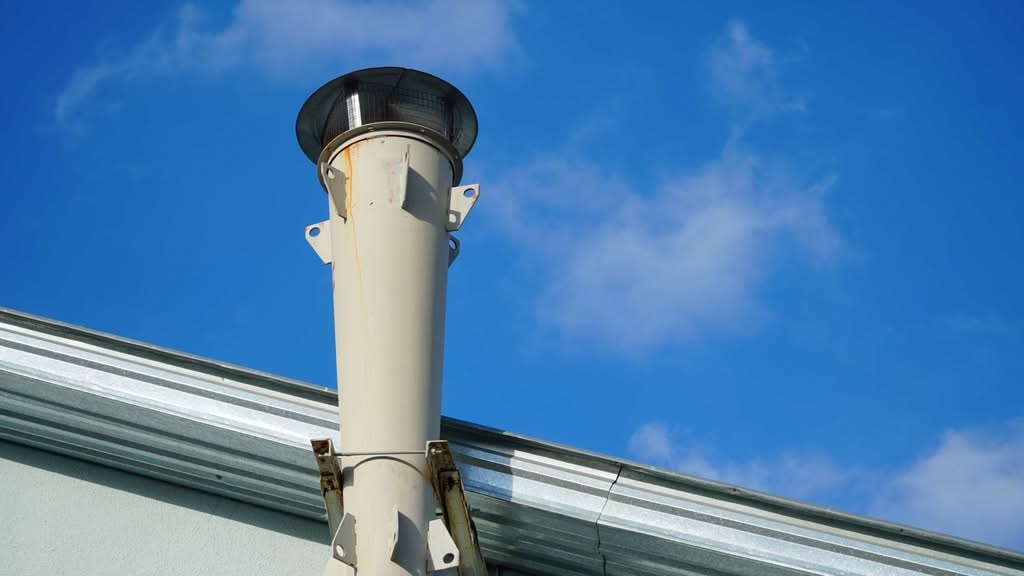
A C-DET (Certified Dryer Exhaust Technician) credential from the Chimney Safety Institute of America (CSIA) proves a technician has passed national exams on airflow physics, fire codes, and duct material science.
When it comes to fire prevention, “good enough” isn’t good enough. This is why we discourage the “handyman” approach.
What Does C-DET Mean?
To earn this, a CSIA-Certified Dryer Vent Specialist must:
Pass a Rigorous Exam: Testing knowledge of heat transfer and airflow physics.
Standard Compliance: Understanding the International Residential Code (IRC).
Ethics: Committing to a consumer-first Code of Ethics.
The “Expert” Difference: Airflow Diagnostics
A certified expert doesn’t just push a brush. We use anemometers to measure airflow velocity and backpressure gauges.
If your vent is 35 feet long with four 90-degree elbows, your dryer is likely struggling against 50% more resistance than it was designed for. We calculate the “Equivalent Length” to ensure your machine isn’t being strangled.
DIY kits often cause “The Slug”—a compressed plug of lint that leads to thermal fuse failure. Furthermore, retail rods frequently snap inside walls, leading to expensive drywall repairs.
Buying a $25 retail kit thinking it’s the same as a professional service. These rods are often made of low-grade plastic that becomes brittle in hot Florida attics.
The Danger of “The Slug”
When homeowners use DIY rods, they lack the industrial vacuum power to pull the lint out. Instead, the brush pushes the lint forward, compressing it into a solid “slug” at a bend in the pipe.
We frequently receive emergency calls in Ocala from homeowners who “just cleaned” their vent, only for their dryer to stop heating. This is almost always a blown thermal fuse caused by a DIY-induced total blockage.
Professional cleaning is a financial gain, not a loss. By restoring airflow, you reduce drying times by 50%, saving roughly $20/month on Florida utility bills while preventing a $200 million national fire risk.
Fire Prevention by the Numbers
According to the National Fire Protection Association (NFPA):
34% of dryer fires are caused by a “failure to clean.”
92% of laundry-related fires involve the dryer.
16,000 fires occur annually, often starting inside the wall where it can’t be seen.
Professional vs. DIY: A Side-by-Side Comparison
| Feature | DIY (Retail Kit) | CSIA-Certified Professional |
| Tool Quality | Plastic rods prone to snapping | Industrial-grade flexible steel rods |
| Suction Power | Standard shop-vac (minimal) | HEPA-filtered high-pressure vacuum |
| Inspection | Visual only (external) | Internal camera & airflow testing |
| Code Compliance | Unknown | Guaranteed to meet NFPA/IRC codes |
| Liability | Homeowner assumes all risk | Licensed and Insured |
We aren’t a national franchise; we are your neighbors. We understand the specific building codes in Ocala, the permit requirements for Lake County, and the strict HOA standards in The Villages.
Specialized Solutions For:
The Villages: Handling long-run vertical vents in patio villas and designer homes.
Ocala Equestrian Estates: Managing oversized laundry rooms with complex venting.
Lake County Waterfronts: Preventing high-humidity mold growth in lakefront properties.

How do I know if I’m hiring a real CSIA-Certified Dryer Vent Specialist?
You can verify any technician’s credentials directly on the CSIA website. Always ask to see their C-DET ID card before they begin work on your home.
Why do Florida dryers take longer to dry in the summer?
Increased humidity in the air being pulled into the dryer makes the heating process less efficient. However, if it takes more than 50 minutes, it is likely a vent blockage rather than just the weather.
Can a blocked vent cause mold in my Florida home?
Yes. If the duct is leaking or the “slug” is causing backpressure, hot moist air escapes into your wall cavities or attic, which are prime environments for mold growth in the Florida climate.
Is a “Handyman” the same as a Specialist?
No. General handymen rarely have the airflow diagnostic tools (anemometers) or the specific C-DET training to identify structural venting issues that violate fire codes.
What is the average cost of a professional cleaning in 2026?
While prices vary by the length of the run, a CSIA-Certified Dryer Vent Specialist typically provides a full diagnostic and cleaning for $150–$250, an investment that pays for itself in energy savings.
Your dryer vent is an exhaust system for a high-heat appliance. You wouldn’t DIY a gas line repair; your dryer vent deserves the same level of professional respect. For residents of Marion and Lake Counties, the choice is clear. Don’t risk a house fire or structural mold.
To Secure Your Home Today:
Check your dryer’s exterior: Is the flap opening? If not, call us.
Verify Certification: Ensure your tech is CSIA-certified.
Schedule an Inspection: Clear the “lint sludge” before the next Florida heatwave.
Ready to protect your home? Visit Complete Dryer Vent today to schedule your professional inspection. Let us handle the heights and the humidity so you can enjoy the Florida lifestyle.

