
In the beautiful rolling hills of Clermont, Florida, homeowners often enjoy modern, multi-story floor plans. While having a second-story laundry room is a brilliant convenience, it creates a complex architectural challenge: the multi-story dryer vent exhaust. Dealing with these systems requires a specific set of skills because, in our humid climate, a neglected vent isn’t just an inefficiency, it’s a ticking time bomb for your home’s safety.
At Complete Dryer Vent, we believe that an informed homeowner is a safe homeowner. This guide will walk you through the essential steps to maintaining your home’s ventilation and explain why professional intervention is the only way to guarantee a fire-safe household.
The Complexity of Multi-Story Dryer Vent Exhausts
When your dryer is located on an upper floor, the multi-story dryer vent exhaust must travel a significant distance to exit the building. Unlike a standard ground-floor vent that might travel three feet through an exterior wall, a multi-story system often climbs 15 to 25 feet vertically before exiting through the roof.
The Physics of Airflow
Standard dryers are designed to push air a certain distance. Every 90-degree turn in your ductwork adds the equivalent of 5 feet of resistance. In many Clermont homes, the vent goes:
- Up the wall (Vertical lift)
- Across the attic (Horizontal run)
- Out the roof (Final exit)
By the time the air reaches the exit, it has lost its velocity. This causes lint to drop out of the air stream and settle in the vertical column, creating a “snowball effect” of blockages.
Why Clermont’s Humidity Amplifies the Risk
Clermont isn’t just hilly; it’s humid. High outdoor humidity levels mean the air your dryer pulls in is already moisture-laden. When this damp air meets the relatively cooler temperatures of your internal wall cavities or attic, condensation occurs inside the multi-story dryer vent exhaust.
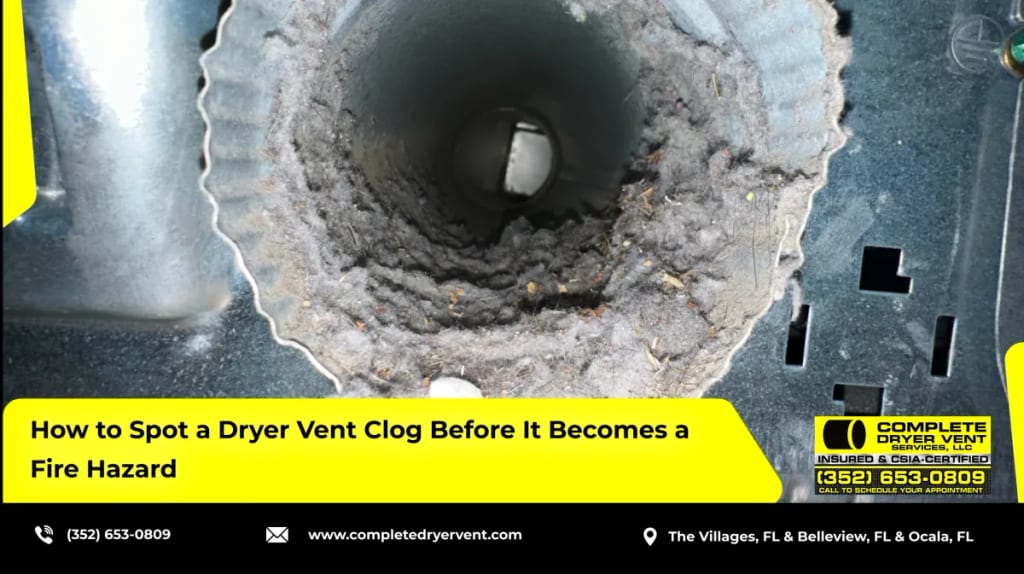
Wet lint is heavy lint. It sticks to the sides of the duct like wet flour, hardening into a “paste” that standard DIY brushes cannot remove. This is a specific local challenge that requires industrial-strength agitation tools.
The Fire Hazard: A Vertical Chimney of Lint
A clogged multi-story dryer vent exhaust acts exactly like a chimney. Lint is one of the most flammable substances found in a home. If the internal temperature of your dryer rises due to restricted airflow, a spark from the heating element can ignite the lint trap.
In a multi-story home, the fire then travels up the “chimney” of the vent. Because these vents are located inside wall cavities and run through attics, a fire can spread to the structure of the roof before smoke detectors even sound in the living areas. According to the USFA (U.S. Fire Administration), “Failure to clean” is the #1 cause of dryer fires.
The Mold Menace: Hidden Dangers in Your Walls
If your multi-story dryer vent exhaust is restricted, that gallon of water removed from every load of laundry has nowhere to go. It often leaks through the duct joints into your insulation and drywall.
In the Florida heat, this creates the perfect breeding ground for:
- Stachybotrys (Black Mold): Which can cause severe respiratory issues.
- Structural Rot: Weakening the wooden studs and floor joists of your home.
Professional sealing and cleaning are the only ways to ensure your venting system remains airtight and moisture-free.
The DIY Trap: Why Homeowner Kits Often Fail
It is tempting to grab a $30 drill-attachment kit from a hardware store, but for a multi-story dryer vent exhaust, this is often a recipe for disaster.
- Rod Breakage: Most DIY rods are made of cheap plastic. When they encounter a clog 15 feet up a vertical pipe, they snap. Now, you have a metal brush and 10 feet of plastic stuck in your wall.
- Roof Access: Most multi-story vents exit on the roof. Without professional safety harnesses and ladders, attempting to clean from the top down is a significant fall risk for Clermont residents.
- Compaction: Amateur cleaning often just pushes the lint into a tighter “plug” at the first 90-degree turn, completely sealing the vent and rendering the dryer unusable.
We strongly discourage DIY attempts on vertical venting systems. The cost of a professional cleaning is a fraction of the cost of a roof repair or a drywall replacement.
Why Professional Certification Matters
When searching for “Dryer Vent Cleaning in Clermont” ,you must look for EEAT:
- Experience: Has the company worked on multi-story systems specifically?
- Expertise: Do they understand the backpressure requirements of modern LG, Samsung, or Maytag high-efficiency units?
- Authoritativeness: Are they recognized by local Clermont trade organizations?
- Trustworthiness: Do they provide transparent, flat-rate pricing?
At Complete Dryer Vent, we treat your home like our own. We utilize Dryer Vent Repair techniques that meet the highest safety standards in the industry.
Signs Your Multi-Story Vent is Failing
Don’t wait for a fire. Look for these powerful warning signs:
- Extended Drying Times: If a load takes 2+ cycles, your airflow is compromised.
- Burning Smell: This is an emergency. Turn off the dryer immediately.
- Hot Exterior: The dryer is hot to the touch or the laundry room feels like a sauna.
- No Lint on Screen: If the lint trap is clean but the clothes are dusty, the lint is bypassing the trap and clogging the multi-story dryer vent exhaust.
Our Multi-Step Professional Cleaning Process
When you hire Complete Dryer Vent for your multi-story dryer vent exhaust, we follow a rigorous protocol:
- Airflow Testing: We use a digital anemometer to measure the wind speed at the exit.
- Scanning: When possible, we use cameras to locate the exact position of the clog.
- The Reverse-Whip Technique: We use high-pressure compressed air and “whips” that pull the lint down or push it out, rather than compacting it.
- Sanitization: We offer antimicrobial treatments to kill mold spores inside the duct.
Frequently Asked Questions
Q: How often should I clean my multi-story vent?
A: Due to the length and vertical nature, we recommend a professional inspection every 12 months for active families.
Q: Can I just clean it from the inside?
A: No. A multi-story dryer vent exhaust must be cleaned from both ends to ensure the roof cap isn’t stuck shut by bird nests or lint buildup.
Q: Will cleaning my vent lower my electric bill?
A: Absolutely. A clear vent can save you upwards of 15-20% on your monthly energy costs related to laundry.
Conclusion
Maintaining your multi-story dryer vent exhaust is a cornerstone of responsible homeownership in Clermont. By choosing professional services over risky DIY methods, you protect your family from fire, prevent toxic mold, and extend the life of your expensive appliances.
Don’t let your laundry room become a liability. Trust the local experts who understand the unique architecture and climate of Lake County.