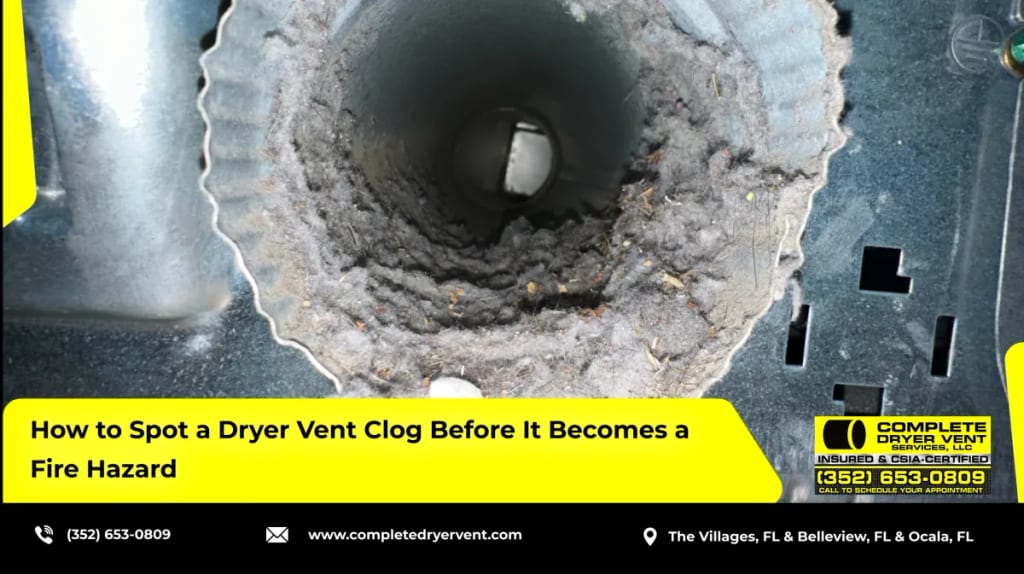
Dryer exhaust repair is the process of fixing damaged, crushed, disconnected, or clogged sections of the duct that carries hot, moist air from your dryer to the outdoors. When that pathway is broken, your dryer works harder, your energy bills climb, and — more seriously — lint accumulation becomes a fire hazard. If your dryer takes two cycles to dry a single load or the room feels unusually hot, the exhaust system likely needs attention now, not later.
Homeowners across Oxford, The Villages, and Wildwood often assume a musty smell or slow drying is just an old machine acting up. In our experience inspecting hundreds of Central Florida homes, the dryer itself is rarely the problem — the exhaust duct is. This guide walks through the warning signs, the repair process, code requirements, and honest cost expectations so you can make a confident decision.
📌 Key Takeaways
- Slow drying, burning smells, and a hot laundry room are the top three signs you need dryer exhaust repair.
- Crushed flexible duct and disconnected joints are the most common damage we find behind Central Florida washers and dryers.
- Florida’s building code requires rigid or semi-rigid metal duct, not vinyl or foil accordion hose.
- A CSIA Certified Dryer Exhaust Technician can diagnose airflow restrictions that a basic cleaning alone won’t fix.
- Annual inspections in Oxford, The Villages, and Wildwood catch problems before they become fire hazards or costly rebuilds.
Jump to a section:
- Spot the Warning Signs
- Understand What Repair Actually Involves
- Know the Florida Dryer Exhaust Vent Code
- Compare Repair Costs and Options
- Decide Between DIY and a Professional
- Frequently Asked Questions
Spot the Warning Signs You Need Dryer Exhaust Repair
Quick Answer: Longer dry times, a burning odor, excess heat in the laundry room, and visible lint around the exterior vent hood are the clearest signals your dryer exhaust vent needs professional attention.
Most homeowners notice the problem gradually. Clothes come out damp after a full cycle, or the dryer runs noticeably hotter than it used to. These are classic symptoms of restricted airflow, which forces the appliance to overwork its heating element.
Why Airflow Restriction Matters
When exhaust air can’t escape efficiently, heat and lint build up inside the duct. According to the National Fire Protection Association, failure to clean dryer vents is a leading contributor to home dryer fires nationwide. That statistic isn’t meant to alarm you — it’s meant to explain why airflow, not just appearance, is what technicians actually measure.
⚠️ Common Mistake: Many homeowners assume a working dryer means a working vent. In reality, a dryer can run fine for years while lint quietly narrows the duct until it’s nearly blocked.
If you’ve already noticed a scorched or burnt smell, don’t wait — our burning smell safety guide covers immediate steps to take before running another load.

Understand What Repair Actually Involves
Quick Answer: Dryer exhaust repair typically means replacing crushed or disconnected duct sections, resealing joints, and correcting improper transitions — not just vacuuming out lint.
A cleaning service removes debris from an otherwise sound duct. Repair goes further: it addresses structural problems like crushed flex hose behind the dryer, pinched sections inside walls, or a duct that’s been severed during a renovation.
Common Repairs We Perform
In homes throughout Wildwood and The Villages, the most frequent culprits are flexible vinyl duct hidden in tight utility closets and exterior vent hoods clogged with nesting material or lint mats. Repairs often include:
- Removing and replacing crushed or torn duct sections with rigid metal duct.
- Resealing loose joints with foil tape (never duct tape, which degrades with heat).
- Correcting oversized duct runs that slow airflow velocity.
- Installing a proper exterior termination, sometimes requiring our exterior vent replacement service.
- Verifying total duct length and elbow count fall within manufacturer limits.
✅ Quick Tip: Ask any technician to show you the airflow reading before and after the repair. A measurable improvement, not just a visual cleaning, confirms the job is actually done.
Homes with severely blocked or collapsed sections sometimes need more than a patch — see our clogged dryer vent repair page for what a full remediation looks like.
Know the Florida Dryer Exhaust Vent Code
Quick Answer: Florida’s building code, based on the International Mechanical Code, requires rigid or semi-rigid metal duct, a maximum of 35 feet of equivalent length, and no screws that penetrate the airflow path.
This matters more in Florida than many states because of our humidity and hurricane-driven construction standards. A duct that’s technically "working" can still violate code if it uses foil accordion hose or exceeds allowable length without adjustment.
What Inspectors Actually Check
Code compliance isn’t just paperwork — it affects insurance claims and home sales. The International Code Council publishes the mechanical code language that Florida jurisdictions adopt locally, and our Florida building code guide breaks it down room by room.
💡 Expert Insight: As a CSIA Certified Dryer Exhaust Technician, I check duct material, length, and termination type on every visit — not just whether air is moving, but whether the system meets current standards.
📊 Data Point: The U.S. Consumer Product Safety Commission has long recommended annual dryer vent inspection as part of routine home maintenance, citing lint accumulation as a preventable hazard — see the CPSC’s home safety resources for consumer guidance.

Compare Repair Costs and Options
Quick Answer: Minor repairs like resealing a joint often run under $150, while full duct replacement with a new exterior termination can range from $250 to $600 depending on duct length and accessibility.
Pricing depends heavily on how the duct is routed. A straight run behind a washer and dryer is far cheaper to repair than duct hidden inside a second-story wall cavity, which sometimes calls for rerouting.
Table: Common Repair Scenarios
| Issue Found | Typical Fix | Rough Cost Range |
|---|---|---|
| Loose or leaking joint | Reseal with foil tape | $75–$150 |
| Crushed flexible duct | Replace with rigid metal | $150–$300 |
| Damaged exterior hood | Exterior vent replacement | $150–$350 |
| Severely clogged/collapsed run | Full clogged vent repair | $250–$600 |
| Duct exceeds code length | Reroute or add booster | $300–$800 |
These are general ranges based on typical Central Florida service calls; your exact quote depends on an on-site inspection. Homeowners in Oxford considering longer duct runs from interior laundry rooms sometimes benefit from our dryer vent rerouting cost guide for Ocala, which applies to similar layouts nearby.
⚠️ Common Mistake: Choosing the cheapest quote without confirming whether it includes rigid duct material. Some low bids reuse the existing damaged vinyl hose, which just delays the next repair.
Decide Between DIY and a Professional
Quick Answer: Surface lint removal is fine for a handy homeowner, but structural exhaust repair — duct replacement, rerouting, or code corrections — is safer and more reliable when handled by a certified technician.
I’ve seen well-intentioned DIY fixes make things worse, like wrapping crushed duct in duct tape that melts under heat, or adding extra elbows that restrict airflow further. These shortcuts often mask a problem rather than solve it.
Table: DIY vs. Professional Dryer Exhaust Repair
| Task | DIY Feasible? | Professional Recommended |
|---|---|---|
| Vacuum lint trap and first few feet of duct | Yes | Optional |
| Replace crushed flexible duct | Sometimes | Yes, for code compliance |
| Diagnose airflow restriction with equipment | No | Yes |
| Reroute duct through walls or ceilings | No | Yes |
| Exterior vent hood replacement | Sometimes | Yes, for proper sealing |
✅ Quick Tip: If you can’t visually confirm both ends of the duct — inside and outside — call a professional rather than guessing at what’s blocking airflow.
A dryer vent safety inspection is a low-cost way to find out whether you’re dealing with a simple cleaning or an actual repair, before spending money guessing.

Frequently Asked Questions
How do I know if I need dryer exhaust repair or just a cleaning?
If a professional cleaning doesn’t improve dry times, or you see crushed, disconnected, or torn duct sections, you likely need repair rather than a standard cleaning. A dryer exhaust cleaning service clears debris, but it can’t fix physical damage to the duct itself.
What does dryer exhaust vent code require in Florida?
Florida’s adopted mechanical code requires rigid or semi-rigid metal duct, limits total equivalent duct length to 35 feet unless adjusted for elbows, and prohibits duct tape or screws that project into the airflow path. Local jurisdictions in Marion, Sumter, and Lake counties enforce these standards during inspections and remodels.
How much does dryer exhaust repair cost in The Villages or Oxford?
Minor joint repairs often cost under $150, while full duct replacement with a new exterior termination typically runs $250 to $600. Homes with longer runs or hidden wall cavities in Oxford and The Villages may cost more due to added labor and rerouting.
Can a clogged dryer vent really cause a house fire?
Yes — lint is highly combustible, and a blocked exhaust duct traps heat near the dryer’s internal components. The Consumer Product Safety Commission and NFPA both list dryer vent maintenance among the most effective ways to reduce residential fire risk.
How often should dryer exhaust vents be inspected?
Most manufacturers and fire safety organizations recommend annual inspection, though households running multiple loads daily may benefit from checking every six months. Homes in humid climates like Central Florida can see faster lint compaction due to moisture in the air.
Is it worth hiring clean vent dryer exhaust specialists instead of a general handyman?
Specialists carry airflow-measuring equipment and understand code requirements that general contractors may not check. A CSIA Certified Dryer Exhaust Technician is trained specifically on exhaust system diagnostics, not just general home repair.
Why does my dryer still take too long after I cleaned the lint trap?
The lint trap only catches a fraction of the lint produced; the rest travels into the duct itself. If drying times haven’t improved, the exhaust duct — not the trap — is almost certainly restricted or damaged.
Final Thoughts on Dryer Exhaust Repair
Dryer exhaust repair isn’t a luxury service — it’s a practical safeguard against fire risk, wasted energy, and premature appliance wear. Most Central Florida homes we visit in Oxford, The Villages, and Wildwood need some form of repair within a few years of installation, especially where flexible duct was originally used. Catching the warning signs early keeps the fix simple and affordable.
- Check your dryer’s cycle time and note any recent changes.
- Inspect the exterior vent hood for visible lint or damage.
- Schedule a professional inspection if airflow seems restricted.
- Request rigid duct material for any replacement work.
- Set a reminder for annual follow-up service.
Our team holds CSIA Certified Dryer Exhaust Technician credentials and serves homeowners throughout Marion, Sumter, Lake, Citrus, and Alachua counties. Schedule your dryer exhaust repair inspection today through our online booking page and breathe easier knowing your system meets current safety standards.