
Dryer duct sealing is the process of closing every gap, seam, and loose joint along your exhaust duct so hot, lint-filled air exits outdoors instead of leaking into your attic or laundry room. Most homeowners assume a clean duct is a safe duct, but a leaky joint can undo even a fresh cleaning within weeks. We’ve opened up attics in Oxford and Wildwood where unsealed seams had quietly packed insulation with years of lint, long before anyone smelled smoke.
📌 Key Takeaways
- Dryer duct sealing closes gaps at joints, elbows, and the vent hood so lint and heat vent outside instead of into your home.
- Unsealed seams are a leading cause of repeat lint buildup even after a professional cleaning.
- Florida’s building code and most local codes require rigid or semi-rigid metal duct, sealed at every joint, not just taped.
- Dryer duct length code limits total run length based on diameter, bends, and the dryer’s airflow rating.
- A CSIA Certified Dryer Exhaust Technician can seal, test, and verify code compliance in one visit.
Jump to a section:
- What Is Dryer Duct Sealing?
- Why Dryer Duct Sealing Matters for Fire Safety
- Dryer Duct Code Requirements You Should Know
- Signs You Need Dryer Duct Repair or Cleaning
- Sealing Methods Compared
- DIY vs Professional Dryer Duct Repair
- FAQs
What Is Dryer Duct Sealing?
Quick Answer: Dryer duct sealing means closing every connection point in the exhaust run with code-approved sealant or clamps, not cloth tape, so air and lint cannot escape into the structure.
Every dryer duct run is made of individual sections joined at elbows, transitions, and the exterior termination. Each connection is a potential leak point. Over time, vibration and heat cause these joints to loosen, which lets pressurized exhaust air push lint sideways instead of outward.
Why Loose Duct Joints Fail
Sheet-metal screws alone don’t seal a joint; they only hold it together. Without mastic or foil-backed tape over the seam, warm moist air finds the smallest gap. That moisture condenses, lint sticks, and the gap grows wider with each drying cycle.
⚠️ Common Mistake: Many homeowners use cloth "duct tape" to patch a loose joint. It dries out and peels within a Florida summer, so the leak returns worse than before.
Why Dryer Duct Sealing Matters for Fire Safety
Quick Answer: Leaking joints let lint accumulate in walls and attics where it’s never cleaned, raising ignition risk far more than a dirty but sealed duct.
Lint is highly combustible, and it ignites at surprisingly low temperatures once it builds up around a heat source. According to the National Fire Protection Association, failure to clean dryer exhaust systems is a top contributing factor in home dryer fires. A sealed duct keeps that lint traveling to the exterior termination, where it belongs.
Lint Buildup and Code Violations
When inspectors find lint staining around a seam, it’s usually flagged as a code violation during resale inspections. According to the U.S. Consumer Product Safety Commission, thousands of residential fires each year are linked to dryer vent systems, and poor maintenance along with improper installation are repeat causes.
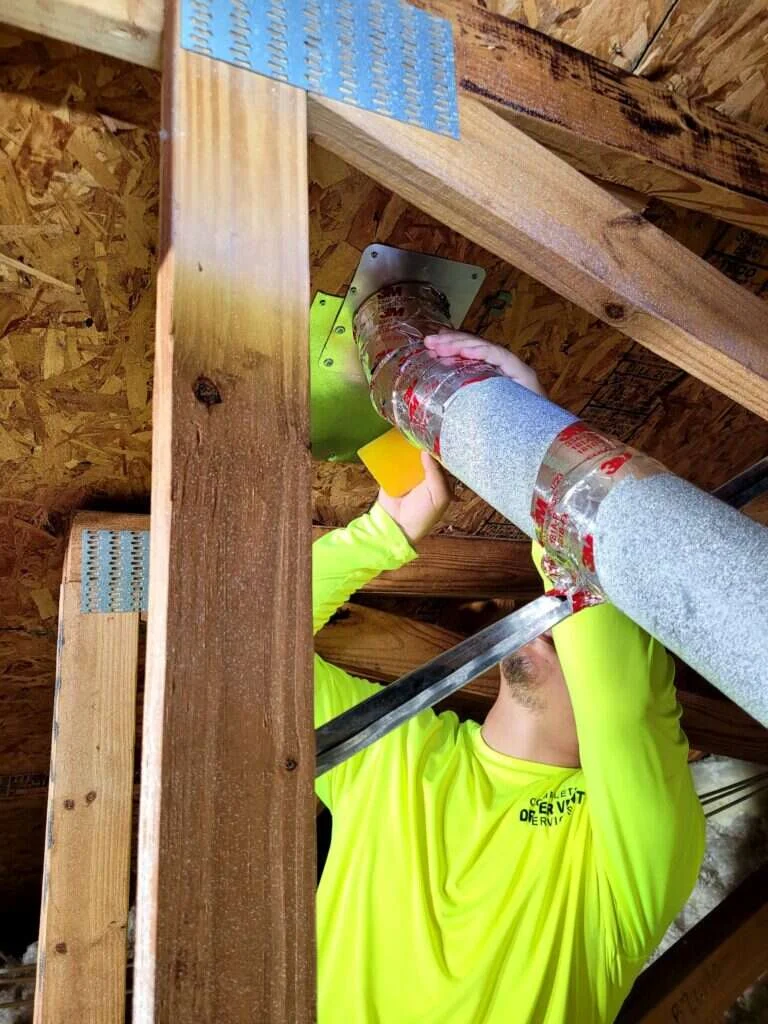
📊 Data Point: The CPSC estimates clothes dryers contribute to thousands of structure fires annually nationwide, with lint and vent obstruction cited repeatedly in incident reports.
Dryer Duct Code Requirements You Should Know
Quick Answer: Most jurisdictions, including Florida, require rigid or semi-rigid metal duct, a maximum run length, and sealed joints — not flexible foil or vinyl duct.
The dryer duct code that applies to most homes in our service area follows the International Residential Code, adopted locally with Florida-specific amendments. It specifies duct material, diameter, and how joints must be fastened and sealed.
Dryer Duct Length Code and Size Standards
Standard residential dryer duct size is 4 inches in diameter. The dryer duct length code generally caps the equivalent run at 35 feet, with deductions for every elbow. We’ve written a full breakdown in our dryer duct length code guide if your run has multiple bends.
💡 Expert Insight: As of 2026, inspectors in Marion and Sumter counties increasingly check for sealed metal joints during resale and insurance inspections, not just duct material.
Homes in The Villages and Lady Lake built before updated code adoption often still have older flexible duct installed. That material isn’t inherently unsafe when new, but it degrades and sags, creating low spots where lint collects even with good sealing. For a deeper look at how Florida’s amendments apply to vent systems, see our Florida building code vent guide.
Signs You Need Dryer Duct Repair or Cleaning
Quick Answer: Longer dry times, a hot laundry room, burning smells, and visible lint around duct joints all point to a sealing or repair issue, not just a dirty filter.
Homeowners often clean the lint trap and assume the problem is solved. But a leaking duct produces the same symptoms as a clogged one, because airflow is escaping before it reaches the outside termination.
When Cleaning Isn’t Enough
If symptoms return within a month or two of a professional cleaning, the duct itself likely has a leak or an undersized run. That’s a repair and sealing issue, not a maintenance issue.
| Symptom | Likely Cause | Recommended Action |
|---|---|---|
| Clothes still damp after full cycle | Leaking joint or clogged run | Inspect and seal all connections |
| Laundry room feels unusually hot | Exhaust air escaping indoors | Schedule dryer duct repair |
| Burning smell during drying | Lint trapped near a loose seam | Shut off dryer, call a technician |
| Lint visible near attic duct runs | Unsealed joint leaking lint | Reseal with mastic or metal tape |
| Dryer shuts off mid-cycle | Thermal cutoff triggered by blockage | Full duct cleaning and inspection |
If you notice a scorched smell specifically, our burning smell safety guide walks through immediate steps to take before calling anyone.
Sealing Methods Compared: What Actually Meets Code
Quick Answer: Foil-backed metal tape and mastic sealant are code-accepted; cloth duct tape and spray foam are not, because they degrade under heat and moisture.
Not every sealing product is rated for dryer exhaust temperatures. Dryers push warm, humid air continuously, and some adhesives simply can’t hold up to that cycle, year after year.
Materials Code Inspectors Reject
Cloth-backed tape, standard caulk, and general-purpose foam are common rejection points during inspections. They look fine on install day but fail within a season in Florida’s humidity.
| Sealing Method | Code Accepted? | Typical Lifespan |
|---|---|---|
| Foil-backed metal tape (UL 181) | Yes | 8-10+ years |
| Mastic sealant on metal joints | Yes | 10+ years |
| Sheet-metal screws alone (no sealant) | No | Leaks within months |
| Cloth duct tape | No | Fails within one season |
| Spray foam | No | Not heat-rated, voids inspection |
✅ Quick Tip: Ask any technician which product they use before work begins. UL 181-rated foil tape and mastic are the two materials that consistently pass inspection.
DIY Duct Sealing vs Professional Dryer Duct Repair
Quick Answer: Simple accessible joints can sometimes be resealed by a confident homeowner, but attic runs, long replacements, and code verification are best left to a licensed technician.
We understand the appeal of a weekend fix. Sealing an exposed joint behind the dryer is manageable for many homeowners with the right tape on hand.
When to Call a CSIA Certified Technician
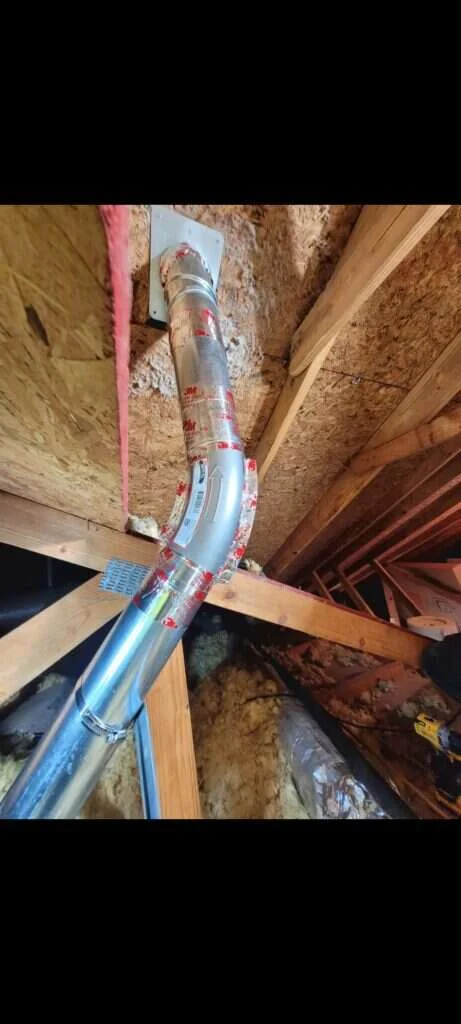
Attic access, multiple bends, or a run that already fails the dryer duct length code calls for a professional evaluation. A CSIA Certified Dryer Exhaust Technician can measure airflow, confirm duct size, and reseal every joint in one visit.
| Factor | DIY Approach | Professional Dryer Duct Repair |
|---|---|---|
| Accessible single joint | Reasonable with UL 181 tape | Optional, still verified faster |
| Attic or crawlspace run | Risky, limited visibility | Recommended |
| Full duct replacement | Not recommended | Required |
| Code compliance check | Difficult to self-verify | Included with service |
| Airflow testing | Not possible without equipment | Standard part of inspection |
If your duct run needs more than a patch, our exterior vent replacement service and clogged dryer vent repair pages outline what a full replacement involves. For homes where the system has never been inspected, a dryer vent safety inspection is the right starting point.
💡 Expert Insight: In our experience across Wildwood and The Villages, most "mystery" lint smells trace back to one unsealed joint behind the dryer or inside the wall cavity — not the exterior vent itself.
We’d rather give an honest caveat here: sealing alone won’t fix an undersized or overly long duct run. If your dryer duct size or length doesn’t meet code, sealing buys time but a proper evaluation against ICC code standards is still necessary.
FAQs
What is dryer duct sealing and why does it matter?
Dryer duct sealing closes gaps at every joint in the exhaust duct using heat-rated materials like foil tape or mastic. It matters because unsealed joints let lint and moisture escape into walls or attics, raising fire risk even in a recently cleaned system.
How do I find a clean dryer duct near me?
Search for a CSIA Certified Dryer Exhaust Technician serving your city, such as The Villages, Oxford, or Wildwood, and confirm they inspect joints during the cleaning, not just the trap and hood. A proper service includes airflow testing after cleaning.
What is the dryer duct length code limit?
Most residential code allows a maximum equivalent run of about 35 feet for a standard 4-inch duct, with length deductions for each elbow. Longer runs typically require a booster fan or a redesigned, shorter route to stay compliant.
How much does dryer duct replacement cost?
Costs vary based on run length, number of bends, and whether attic or wall access is needed, so an in-person estimate is the most reliable figure. A full dryer duct replacement is often more cost-effective long-term than repeated patch repairs on an aging run.
Can I use regular tape for dryer duct sealing?
No, cloth-backed duct tape is not code-approved for dryer exhaust because it dries out and peels under sustained heat. UL 181-rated foil tape or mastic sealant are the accepted materials for a durable, inspection-ready seal.
How often should dryer duct repair or cleaning happen?
Most homes need a cleaning and joint check once a year, though larger households or long duct runs may need it more often. If you notice longer dry times or a burnt smell sooner than that, schedule a repair visit immediately rather than waiting.
What are signs of a blocked dryer duct versus a leaking one?
A blocked duct usually causes very long dry times and a dryer that overheats or shuts off mid-cycle. A leaking duct causes similar dry-time issues but also a noticeably hot laundry room and visible lint near joints, since air is escaping before reaching the blockage point.
Final Thoughts
Dryer duct sealing is one of the simplest ways to close the gap between a clean duct and a genuinely safe one. Code-approved materials, correct duct size, and a run that meets the dryer duct length code all work together to keep lint moving outside instead of into your home. If something here sounded familiar — a hot laundry room, a faint burnt smell, or lint near a joint — it’s worth a professional look rather than another round of guesswork.
- Check accessible joints behind your dryer for visible lint or loose tape.
- Note how long a typical drying cycle takes compared to when the dryer was new.
- Schedule a professional inspection if symptoms persist after cleaning the lint trap.
- Ask whether your technician is a CSIA Certified Dryer Exhaust Technician before booking.
Our technicians are CSIA Certified Dryer Exhaust Technicians serving Oxford, The Villages, Wildwood, and surrounding Marion and Sumter county communities. Schedule a dryer duct sealing and safety inspection today to protect your home before the next drying cycle.

