Dryer vent cleaning central florida homeowners search for isn’t just about fresher laundry — it’s a documented fire-safety measure backed by national fire data. A clogged vent traps lint, moisture, and heat, forcing your dryer to work harder while raising the risk of ignition. Regular, professional cleaning restores airflow, cuts drying times, and protects your family and your home.
Many homeowners assume a lint trap is enough protection. It isn’t. The lint trap only catches a fraction of the fibers that travel down the vent line, and the rest builds up over months of use, especially in Florida’s humid climate. That buildup is the single biggest preventable cause of dryer fires nationwide.
📌 Key Takeaways
- Clogged dryer vents are a leading cause of home clothes dryer fires nationwide.
- Florida’s humidity accelerates lint clumping compared to drier climates.
- Most homes need professional cleaning once a year; heavy-use households need it more often.
- CSIA Certified technicians follow national standards, not guesswork.
- Longer dry times and a hot dryer exterior are early warning signs, not normal behavior.
Jump to a section:
- What Dryer Vent Cleaning Actually Involves
- Signs Your Vent Needs Attention
- Why Central Florida’s Climate Raises the Stakes
- DIY vs. Professional Cleaning
- What Happens During a Professional Visit
- How Often You Should Schedule Service
- Choosing the Right Vent Cleaning Company
- Frequently Asked Questions
What Dryer Vent Cleaning Actually Involves
Quick Answer: Dryer vent cleaning removes lint, debris, and blockages from the entire exhaust duct, not just the lint trap, restoring safe airflow from the dryer to the exterior termination.
A dryer exhaust system runs from the back of the machine, through wall or ceiling ductwork, and out through an exterior vent cover. Lint accumulates along every foot of that path, particularly at bends and transitions. Professional cleaning uses rotating brushes and high-powered vacuum equipment to clear the full run, not just the accessible ends.
Why the Lint Trap Isn’t Enough
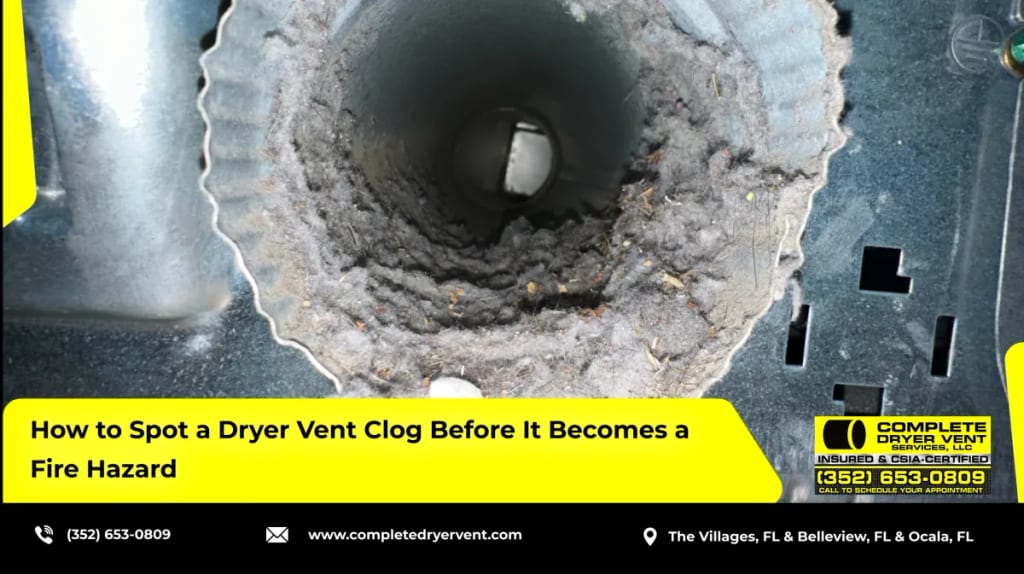
Your lint trap captures maybe 60-70% of loose fibers during a normal cycle. The remainder rides the airflow further into the ductwork and settles wherever the air slows down. Over time, that residue narrows the duct’s interior diameter, and the dryer has to push exhaust through a smaller opening.
💡 Expert Insight: As a CSIA Certified Dryer Exhaust Technician, I’ve opened vent runs that looked clear from the outside but were nearly 80% blocked internally. Visual inspection from indoors rarely tells the whole story.

Signs Your Vent Needs Attention
Quick Answer: Longer dry times, a hot dryer exterior, a burning smell, and visible lint at the exterior vent hood are the four clearest warning signs of a blocked exhaust system.
Most homeowners notice the problem gradually. Clothes take two cycles instead of one, the laundry room feels warmer than usual, or the dryer shuts off mid-cycle due to overheating. Any of these deserve a closer look before they escalate.
When It’s More Than an Inconvenience
A burning smell during operation is never normal and should prompt an immediate shutdown of the machine. According to the National Fire Protection Association, failure to clean dryers is the leading factor contributing to home clothes dryer fires. If your exterior vent flap barely moves when the dryer runs, airflow is likely restricted.
⚠️ Common Mistake: Homeowners often replace the dryer thinking it’s broken, when the real culprit is a blocked vent line choking off airflow to a perfectly functional machine.
We cover this topic in more depth in our guide on warning signs of a clogged dryer vent, which walks through each symptom step by step.
Why Central Florida’s Climate Raises the Stakes
Quick Answer: Florida’s high humidity causes lint to clump and stick to duct walls faster than in drier states, so vents here fill up sooner and need more frequent professional service.
Humidity is the quiet accelerant behind Central Florida’s higher dryer-vent failure rate. Damp lint adheres to metal and flexible ducting far more aggressively than dry lint does, creating dense blockages in less time.
A Regional Pattern We See Firsthand
Working across Lake, Sumter, and Marion counties, we routinely see heavier lint buildup in homes throughout The Villages, Oxford, and Wildwood than we’d expect in similar homes up north. Humid air, longer AC-driven indoor seasons, and dense retirement-community laundry schedules all combine to shorten the safe interval between cleanings.
📊 Data Point: According to the U.S. Fire Administration, clothing dryers are involved in thousands of reported home fires annually, with failure to clean listed as the top contributing factor.
Homeowners in Leesburg and Clermont often ask why their vent clogs faster than a relative’s up north. The honest answer is climate, not carelessness — our Florida dryer vent cleaning guide explains the regional factors in detail.
DIY vs. Professional Cleaning
Quick Answer: DIY tools can clear the first few feet of duct, but only professional dryer vent cleaning equipment reaches the full run, including hidden bends, roof terminations, and long horizontal sections.
Store-bought brush kits help with light maintenance between professional visits. They rarely reach beyond 10-15 feet, though, and most Central Florida homes have longer or more angled runs than that.
Comparing the Two Approaches
The table below breaks down the realistic differences homeowners should weigh before deciding.
| Factor | DIY Cleaning | Professional Dryer Vent Cleaning |
|---|---|---|
| Reach | 10-15 ft typical | Full duct run, including roof/wall terminations |
| Equipment | Basic brush kit | Rotary brush + high-CFM vacuum system |
| Inspection | Visual only | Airflow testing, camera inspection available |
| Time investment | 30-60 minutes, repeat often | 30-45 minutes, once or twice yearly |
| Fire-risk reduction | Partial | Comprehensive |
✅ Quick Tip: If your vent run is longer than 15 feet or has more than two 90-degree bends, DIY brushes likely aren’t reaching the real blockage.
For homes with persistent airflow problems, a full clogged dryer vent repair may be needed alongside cleaning, especially if crushed or disconnected ducting is discovered.
What Happens During a Professional Visit
Quick Answer: A professional visit includes a system inspection, full-length brushing and vacuuming, an airflow test, and a review of the exterior termination before the technician leaves.
A proper appointment starts with disconnecting the dryer and inspecting the duct material, length, and condition. Rigid metal duct performs best; older homes sometimes still have flexible foil or plastic ducting that should be upgraded.
The Cleaning Sequence, Step by Step
- Inspect the interior connection and duct material for damage or code issues.
- Insert a rotating brush system paired with vacuum extraction along the full duct length.
- Clear the exterior vent hood and check that the damper flap opens fully.
- Reconnect the dryer and run an airflow test to confirm proper exhaust velocity.
- Document findings and recommend repairs, such as a dryer vent box installation if the dryer sits too close to the wall.
💡 Expert Insight: An airflow test at the end of service matters as much as the cleaning itself — it’s the only way to confirm the fix actually worked.

How Often You Should Schedule Service
Quick Answer: Most Central Florida households should schedule professional cleaning once a year, while larger families, pet owners, and homes with long duct runs often benefit from twice-yearly visits.
Annual cleaning is a reasonable baseline for a household of two to three people doing average laundry volume. That interval shrinks quickly, though, once you factor in pets, teenagers, or a duct run longer than 25 feet.
Adjusting for Your Household
Homes in growth areas like The Villages and Wildwood often run laundry daily due to community amenities and shared schedules, which shortens the safe interval. If you notice drying times creeping up months before your scheduled visit, don’t wait for the calendar reminder.
⚠️ Common Mistake: Scheduling cleaning only after a problem appears, rather than on a preventive annual schedule, is the most common gap we see in home maintenance routines.
Our dryer vent safety inspections page outlines how inspection frequency should adjust based on usage patterns and duct configuration.
Choosing the Right Vent Cleaning Company
Quick Answer: Look for CSIA certification, transparent pricing, before-and-after documentation, and a technician willing to explain what they found in plain language.
Not every company advertising dryer vent cleaning follows the same standards. The Chimney Safety Institute of America certifies technicians specifically in dryer exhaust systems, which means the work follows documented industry procedures rather than guesswork.
Questions Worth Asking Before You Book
Ask whether the technician tests airflow after cleaning, not just before. Ask whether they inspect the exterior termination and vent cover condition. A company that only vacuums the accessible end of the duct isn’t delivering a complete service.
✅ Quick Tip: Request photos of the before-and-after condition of your duct. A reputable technician will have no problem sharing them.
We’re proud to hold CSIA Certified Dryer Exhaust Technician credentials, and our reviews page reflects the standard we hold ourselves to across every appointment.
Frequently Asked Questions
How much does dryer vent cleaning cost in Central Florida?
Pricing varies with duct length, roofline access, and whether repairs like a damaged vent cover are needed. Most standard residential cleanings fall within a predictable range, and a technician can give an exact quote after a brief phone description of your setup.
How do I know if my dryer vent is clogged?
The clearest signs are longer drying times, a hot dryer cabinet, a burning smell, and little to no airflow at the exterior vent hood when the dryer runs. If two or more of these apply, schedule an inspection soon.
Is dryer vent cleaning in Leesburg different from other areas?
The process is the same everywhere, but homes in Leesburg and nearby communities often have longer duct runs due to lot layouts, which can mean lint builds up faster than expected. Local technicians familiar with the area’s typical home construction can spot these patterns quickly.
Can I clean my dryer vent myself?
You can maintain the first several feet with a basic brush kit, but full dryer vent cleaning of longer or bent duct runs generally requires professional equipment. DIY tools rarely reach roof or high-wall terminations safely.
How often should dryer vents be cleaned in Florida homes?
Annual cleaning is the standard recommendation for most Florida households, though homes with pets, large families, or long duct runs often need service twice a year. Florida’s humidity is a key reason the interval runs shorter than in drier climates.
What is included in professional dryer vent cleaning central florida companies typically offer?
A standard service includes full duct-length brushing and vacuuming, an exterior vent hood check, an airflow test, and a written summary of findings. Many companies, including ours, also flag related issues like crushed ducting or missing vent covers during the same visit.
Does a clogged dryer vent really cause house fires?
Yes — according to national fire data, failure to clean dryer vents is consistently cited as a leading contributing factor in home clothes dryer fires. Lint is highly combustible, and a blocked vent traps heat exactly where ignition is most likely.
Final Thoughts
Dryer vent cleaning central florida homeowners schedule on a regular basis is one of the simplest, most overlooked home safety habits available. It protects against fire risk, extends the life of your dryer, and keeps energy costs down by restoring proper airflow. Florida’s humidity means local homes often need attention sooner than the national average suggests, so don’t rely on a calendar date alone — watch for the warning signs along the way.
- Check your exterior vent hood for lint buildup and flap movement.
- Note any increase in drying time or unusual heat from the dryer cabinet.
- Schedule a professional inspection if it’s been a year or more since your last cleaning.
- Ask your technician about airflow testing and documentation before booking.
Complete Dryer Vent Services, LLC is CSIA Certified and serves communities throughout Lake, Sumter, and Marion counties, including The Villages, Oxford, Wildwood, Leesburg, and Clermont. Book your dryer vent cleaning appointment today and breathe easier knowing your home’s exhaust system is clear.