
If you’re typing "dryer hose cleaning near me" into your phone right now, chances are your dryer is taking forever to dry a single load. That’s usually the first clue that lint has packed itself into the flexible hose behind the machine, choking off airflow and quietly raising your fire risk. A thorough cleaning clears that blockage, restores drying speed, and — according to the U.S. Consumer Product Safety Commission, failure to clean dryer vents is one of the leading causes of home dryer fires. This guide walks through what real cleaning involves, how to tell the difference between a quick DIY fix and a job for a certified technician, and what homeowners across Marion, Sumter, and Lake counties should expect to pay.
We’ll also cover dryer hose clamps, replacement timing, and how often a checkup actually makes sense for Florida’s humid climate. By the end, you’ll know exactly what to search for — and what to avoid — the next time lint buildup slows your laundry routine.
📌 Key Takeaways
- Lint-clogged dryer hoses are a documented home fire hazard, not just a nuisance.
- A dryer taking 2+ cycles to dry clothes is the #1 warning sign you need cleaning now.
- Flexible foil or semi-rigid hoses should be replaced, not just cleaned, every 3-5 years.
- Metal worm-gear clamps outperform plastic zip ties for long-term airflow sealing.
- CSIA Certified Dryer Exhaust Technicians follow standardized safety protocols beyond a shop-vac pass.
Jump to a section:
- What Dryer Hose Cleaning Actually Involves
- Warning Signs You Need Cleaning Now
- DIY vs Professional Cleaning
- Dryer Hose Replacement in The Villages, Oxford & Wildwood
- How Often to Schedule Service
- FAQ
What Dryer Hose Cleaning Actually Involves
Quick Answer: Dryer hose cleaning means physically removing compacted lint from the flexible connector between your dryer and the wall vent, then verifying airflow through the entire exhaust path. It’s not the same as wiping the lint trap — that only catches a fraction of what escapes.
Most homeowners assume emptying the lint trap after every load is enough. In reality, a portion of lint always slips past the trap and settles inside the hose itself. Over months, that residue thickens into a dense mat that restricts airflow long before it’s visible from either end.
A proper job involves disconnecting the hose from both the dryer and the wall vent, brushing or vacuuming the interior length, and inspecting for tears, sagging, or crushed sections. Technicians also check the exterior vent hood, since a stuck flapper can mimic the same symptoms as an internal clog.
The Difference Between a Dryer Hose and a Dryer Vent
The "hose" is the short flexible or semi-rigid section connecting the dryer to the wall. The "vent" is the rigid ductwork running through the wall or attic to the exterior termination point. Confusing the two often leads homeowners to clean only the visible hose while a much larger clog sits further down the line — a gap our professional dryer vent cleaning service is built to catch.
✅ Quick Tip: Pull the dryer away from the wall and look for scorch marks, a musty smell, or a hose that feels warmer than the dryer housing — all point to trapped heat and lint.
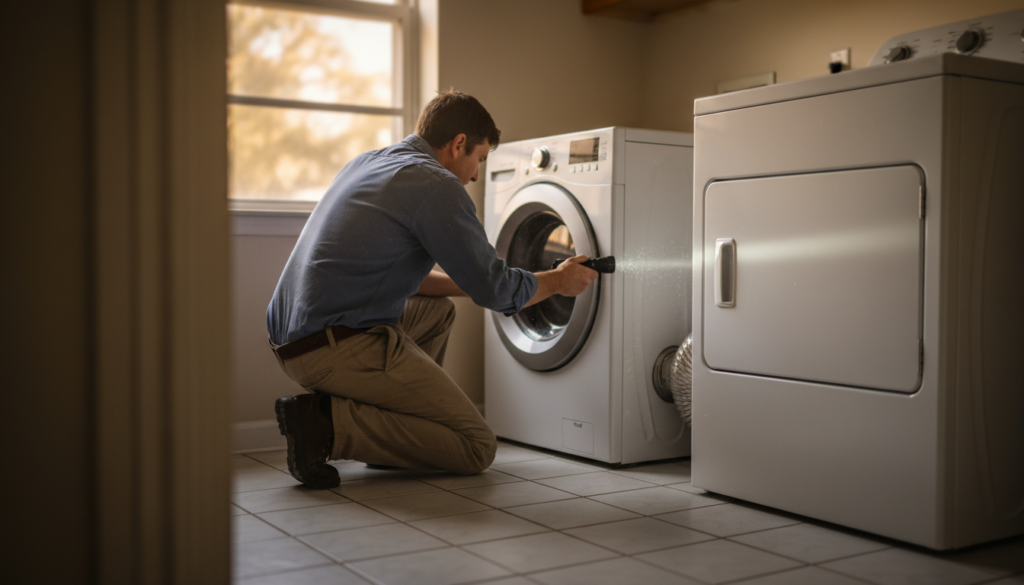
Warning Signs You Need Dryer Hose Cleaning Near Me Today
Quick Answer: Longer dry times, a hot-to-the-touch dryer exterior, and a burning smell are the three clearest signals that lint has built up in your hose or vent line. Ignoring them raises both your energy bill and your fire risk.
We’ve inspected hundreds of homes across Marion and Sumter counties, and the pattern is consistent: homeowners wait until laundry takes two or three cycles before searching for help. By that point, airflow is often reduced by more than half.
A burnt or overly warm smell coming from the laundry room deserves immediate attention rather than a wait-and-see approach. If that describes your situation, our burning smell safety guide walks through what to check before running another load.
Lint Buildup, Heat, and Fire Risk
Lint is highly combustible, and a clogged hose traps heat that would normally vent outside. The National Fire Protection Association reports failure to clean as a top contributing factor in clothes dryer fires nationwide. That statistic isn’t meant to alarm you — it’s meant to explain why a five-minute inspection matters.
⚠️ Common Mistake: Running the dryer with the hose kinked behind the machine to save space. A tight bend restricts airflow just as much as a lint clog, even right after cleaning.
| Symptom | Likely Cause | Recommended Action |
|---|---|---|
| Clothes still damp after full cycle | Lint clog in hose or vent | Schedule cleaning |
| Dryer exterior hot to touch | Restricted exhaust airflow | Inspect hose and vent hood |
| Burning or musty smell | Lint contacting heating element | Stop use, call a technician |
| Loud rattling or flapping outside | Damaged exterior vent flap | Vent cap replacement |
DIY vs Professional Dryer Hose Cleaning
Quick Answer: A homeowner can safely handle light surface cleaning with a vent brush kit, but full hose and vent-line clearing typically requires professional tools and training to reach hidden sections.
I’ve walked customers through both approaches over the years, and the honest answer is that DIY works for maintenance, not for real recovery from a serious clog. Store-bought brush kits reach a few feet at best, leaving the rest of a long run untouched.
What a CSIA Certified Technician Checks
Our technicians are CSIA Certified Dryer Exhaust Technicians, meaning we follow standardized inspection steps rather than guessing. That includes airflow testing, exterior termination checks, and verifying the hose material meets current fire-safety expectations referenced in the Florida Building Code.
💡 Expert Insight: A clean lint trap can still hide a fully blocked hose. Airflow testing at the exterior vent is the only reliable way to confirm the whole system is clear, not just the visible parts.
| Factor | DIY Cleaning | Professional Cleaning |
|---|---|---|
| Tools used | Basic brush kit | Rotary brush, vacuum, camera inspection |
| Reach | 3-6 feet typical | Full duct run, including attic/roof sections |
| Time required | 30-60 minutes | 30-45 minutes, same-day results |
| Fire-risk verification | Visual only | Airflow-tested confirmation |
| Best for | Light monthly upkeep | Annual deep clean or clog symptoms |
Dryer Hose Replacement in The Villages, Oxford & Wildwood
Quick Answer: Flexible dryer hoses should be replaced, not just cleaned, roughly every 3-5 years, sooner if the material is crushed, torn, or made of unsafe thin plastic. Homes in The Villages and Oxford see faster wear due to longer laundry room duct runs common in newer builds.
We regularly handle dryer hose replacement the villages homeowners request after a routine cleaning reveals a hose too damaged to keep in service. Vinyl accordion-style hoses, once common, are now considered a fire hazard and should be swapped for rigid metal or UL-listed semi-rigid alternatives.
Choosing the Right Dryer Hose Clamps
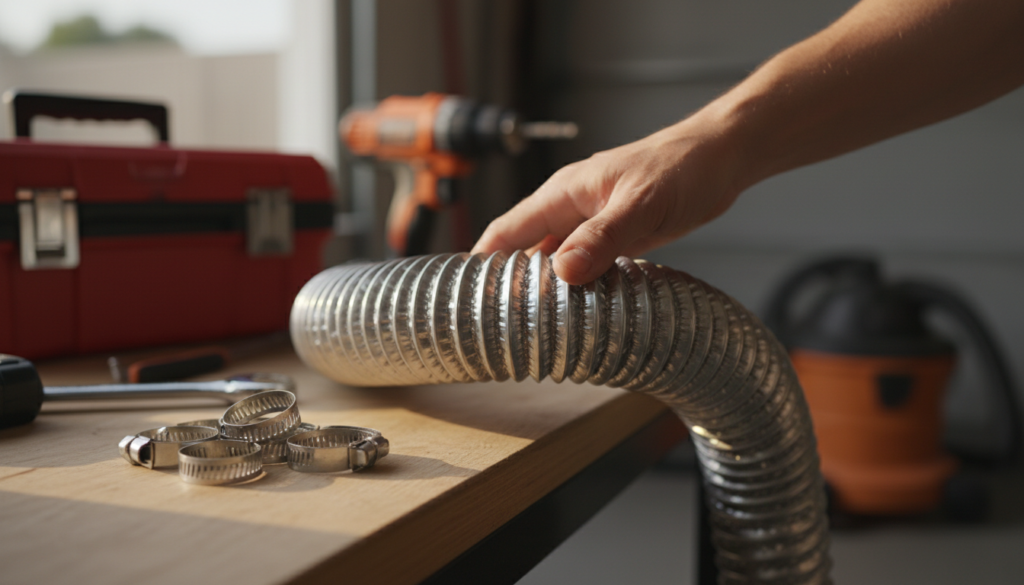
The clamp sealing each connection matters almost as much as the hose itself. Loose plastic zip ties allow lint-laden air to leak into the wall cavity instead of venting outside, which undermines even a freshly cleaned system.
📊 Data Point: According to guidance summarized by ENERGY STAR, a fully sealed, unobstructed dryer vent path can cut drying time and energy use noticeably compared to a leaking or partially blocked one.
| Clamp Type | Durability | Recommended Use |
|---|---|---|
| Plastic zip tie | Low | Temporary fix only |
| Spring clamp | Moderate | Standard residential hookup |
| Metal worm-gear clamp | High | Preferred for long-term, tight seal |
Homeowners in Wildwood and Oxford often ask whether replacement or cleaning solves their airflow problem. In most cases, cleaning first reveals whether the hose material itself is the real issue, which is why our team inspects before recommending a swap — see our dryer vent repair services for the full process.
How Often Should You Schedule Dryer Vent Cleaning?
Quick Answer: Most Central Florida households need a full cleaning once a year, though larger families or homes with long duct runs may need it every six to nine months.
Humidity accelerates lint compaction, so annual service that might be sufficient in a drier climate often needs to shift to a shorter interval here. If you’ve had a hurricane pass through recently, it’s also worth an inspection — debris and nesting materials can enter exterior vents during storms, a scenario covered in our hurricane inspection guide.
Setting a Realistic Maintenance Schedule
A simple rule: if you’re running more than one load of laundry daily, lean toward the six-month mark. Lighter-use households, such as single occupants or seasonal residents in The Villages, can typically stretch to twelve months safely.
✅ Quick Tip: Mark your dryer cleaning date on the same calendar reminder as your HVAC filter change — the two tasks pair naturally and keep both systems running efficiently.
Frequently Asked Questions
How do I find reliable dryer hose cleaning near me?
Look for a company with certified technicians, transparent pricing, and reviews from homeowners in your specific area, such as Marion or Sumter County. Confirm they inspect the full exhaust path, not just the visible hose section, before booking.
How much does dryer hose replacement cost in The Villages?
Costs vary based on hose length, material, and access difficulty, but most straightforward replacements are completed in under an hour during a standard service visit. A technician can give an exact quote after inspecting your current setup.
What type of dryer hose clamps are safest?
Metal worm-gear clamps generally provide the tightest, longest-lasting seal compared to plastic zip ties or basic spring clamps. A secure clamp prevents lint-filled exhaust air from leaking into wall cavities.
Can a clogged dryer hose really cause a fire?
Yes — trapped lint is highly flammable, and restricted airflow causes heat to build up faster than it can escape. The U.S. Consumer Product Safety Commission lists dryer maintenance as a key fire-prevention factor for households.
How long does professional dryer hose cleaning take?
Most residential jobs take 30 to 45 minutes, though homes with long or complex duct runs may take slightly longer. Same-day scheduling is common for straightforward single-story homes.
Is DIY dryer hose cleaning safe to do myself?
Light surface cleaning with a proper brush kit is generally safe for routine upkeep between professional visits. However, full clog removal and airflow verification are best left to a trained technician for accurate results.
Do I need dryer vent cleaning even if my hose looks fine?
Yes — lint often accumulates further down the duct run, out of sight from the hose connection at the dryer. A full inspection, like the ones detailed in our warning signs guide, catches problems a visual check alone would miss.
Final Thoughts on Dryer Hose Cleaning Near Me
A search for dryer hose cleaning near me usually starts with a small annoyance — slow drying — but it points to a genuine safety issue worth taking seriously. Regular cleaning, timely hose replacement, and quality clamps work together to keep airflow strong and fire risk low. Central Florida’s humidity means most homes need this attention more often than climates elsewhere, especially in longer-run installations common around The Villages, Oxford, and Wildwood.
Next steps:
- Check your dryer’s cycle time over the next few loads for signs of slow drying.
- Inspect the exterior vent hood for a stuck or damaged flapper.
- Schedule a professional inspection if it’s been over a year since your last cleaning.
- Ask about hose material and clamp type during your next service visit.
Our team holds CSIA Certified Dryer Exhaust Technician credentials and serves homeowners throughout Marion, Sumter, Lake, Citrus, and Alachua counties. Contact us today to schedule your dryer hose cleaning and breathe easier about fire safety.

