
Clothes come out of dryer smelling burnt most often because lint has clogged the vent, trapping heat and scorching fabric fibers instead of drying them. It can also mean a failing heating element or a dryer that’s simply overdue for a real cleaning. Either way, it’s not something to ignore — it’s usually your dryer’s first warning before a bigger, hotter problem develops.
Many homeowners assume the smell means the clothes are dirty or the detergent is off. In reality, it’s almost always mechanical: airflow is restricted, temperatures climb past normal range, and the odor is the dryer telling you it’s working too hard. I’ve walked into homes in The Villages where the vent hadn’t been cleaned in six years — the burnt smell was the least of what we found. Below, we’ll walk through the real causes, the safety stakes, and exactly what to do next.
📌 Key Takeaways
- A burnt smell almost always points to restricted airflow, not dirty laundry.
- Lint buildup inside the duct is the single most common cause we find on service calls.
- Ignoring it raises fire risk — the CPSC tracks thousands of dryer-related fires yearly.
- A simple lint-trap check takes two minutes and can rule out the easiest fix first.
- Homes in Oxford, Wildwood, and The Villages should have vents inspected at least annually due to heavy seasonal drying loads.
Jump to a section:
- What Causes Clothes to Smell Burnt
- Is This Actually Dangerous?
- How to Fix It Step by Step
- DIY Cleaning vs. Professional Service
- Preventing Burnt Smells for Good
- FAQ
Clothes Come Out of Dryer Smelling Burnt: What’s Really Happening
Quick Answer: The burnt odor usually comes from lint restricting airflow, which raises internal temperatures and scorches fabric or dust inside the drum. A dirty lint trap, a crushed vent hose, or a failing heating element are the three usual suspects.
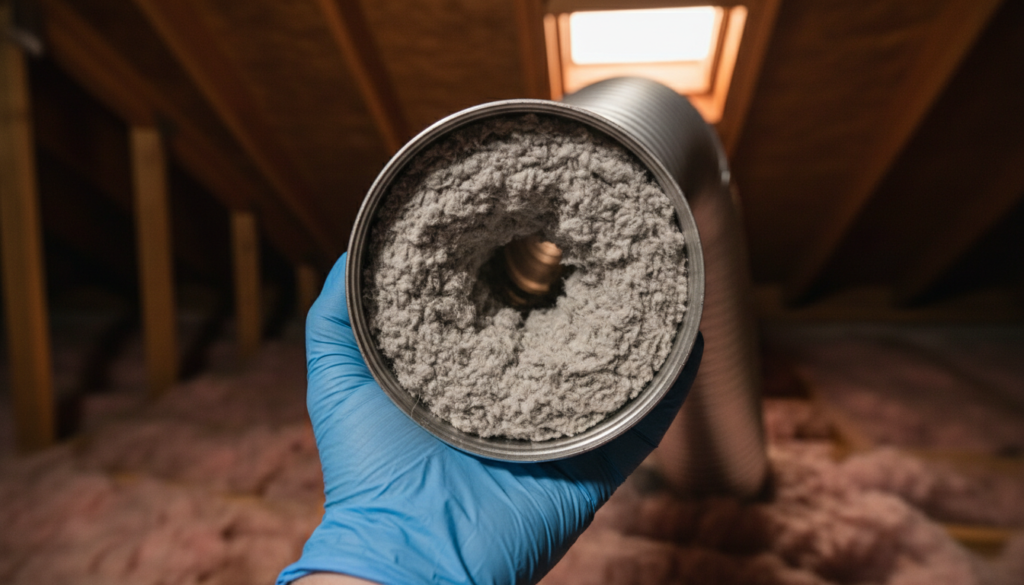
Dryers are designed to move a steady stream of hot air through the drum and out an exhaust duct. When that duct is packed with lint, the hot air has nowhere to go. The heat backs up, temperatures spike well past normal, and the smell you notice is often scorched lint or fabric fibers rather than the clothes themselves.
Common Reasons Behind the Burnt Odor
A clogged vent isn’t the only cause, but it’s the most frequent one we see on service calls across Marion and Sumter counties. Other contributors include a worn drive belt rubbing against metal, a malfunctioning thermostat, or pet hair packed around the drum seal.
⚠️ Common Mistake: Homeowners often replace the dryer thinking it’s broken, when a simple vent cleaning would have solved the smell for a fraction of the cost.
Why Lint Buildup Gets Worse Over Time
Lint doesn’t just sit in one place — it travels through the duct and clings to bends, seams, and screws. Every load adds a little more, and airflow drops gradually until one day it’s noticeably worse. According to the U.S. Fire Administration, failure to clean dryers is a leading factor in home dryer fires, which is exactly why routine dryer cleaning matters more than most homeowners realize.
Is a Burnt Smell From the Dryer Actually Dangerous?
Quick Answer: Yes — a persistent burnt smell signals overheating, and overheating dryers are a documented residential fire hazard. It’s not an emergency every time, but it should never be treated as harmless background noise.
The dryer’s heating element can reach several hundred degrees during normal operation. When exhaust airflow is blocked, that heat has nowhere to escape, and surrounding lint — which is highly combustible — can ignite. This is precisely the failure mode described in our burning smell safety guide.
What the Data Shows
📊 Data Point: The National Fire Protection Association reports that failure to clean the dryer is the leading contributing factor in home clothes dryer fires nationwide.
That statistic isn’t meant to scare anyone — it’s meant to explain why a burnt smell deserves prompt attention rather than a shrug. In my experience inspecting vents across Ocala and The Villages, the homes with the strongest odor complaints usually have the most compacted ductwork.
When the Smell Signals an Emergency
If you notice smoke, a hot vent cover to the touch, or the smell intensifying mid-cycle, stop the dryer immediately and unplug it. That’s a different situation from a mild burnt scent after a normal load, and it warrants an urgent inspection rather than a routine appointment.
✅ Quick Tip: Feel the exterior vent cover after a cycle. If it’s hot enough to make you flinch, airflow is likely restricted somewhere in the run.
How to Fix Clothes That Smell Burnt From the Dryer
Quick Answer: Start with the lint trap and exterior vent cap, then check the full duct run if the smell persists. Most homeowners can rule out the easy causes in under ten minutes before calling a technician.
DIY Checks You Can Do Today
- Clean the lint trap by hand — a full trap restricts airflow instantly.
- Check the exterior vent cap for a bird’s nest, debris, or a flap that won’t open.
- Run the dryer empty for five minutes and feel for weak or absent airflow at the exterior vent.
- Inspect flexible hose sections behind the dryer for crushing or sharp kinks.
- Note how long a typical load takes — a load that now takes twice as long often means a clogged path.
When to Call a Professional
If the smell continues after these checks, or if you can’t safely access the full duct run, it’s time for a professional inspection. Our team holds CSIA Certified Dryer Exhaust Technician credentials, meaning we’re trained specifically to trace and clear these hidden blockages safely.
💡 Expert Insight: A CSIA-certified inspection checks the entire path — drum to termination — not just the parts you can reach from behind the dryer.
For homes with recurring issues, our clogged dryer vent repair service addresses crushed sections, disconnected joints, and undersized transitions that DIY cleaning can’t fix.

DIY Cleaning vs. Professional Dryer Vent Service
Quick Answer: DIY cleaning helps with surface lint near the dryer, but only professional equipment reaches the full duct length safely. For most single-family homes, an annual professional cleaning paired with monthly lint-trap upkeep covers both bases.
| Factor | DIY Cleaning | Professional Service |
|---|---|---|
| Reach | First 3-6 feet of duct | Full duct run to termination |
| Tools | Vacuum, brush | Rotary brush systems, cameras |
| Fire risk detection | Limited | Full inspection with certification |
| Time investment | 20-30 minutes | 30-60 minutes, done once |
| Best for | Monthly lint-trap upkeep | Annual full-system cleaning |
Why Reach Matters More Than Effort
Most residential dryer ducts run 10 to 25 feet before reaching the exterior wall, often with several bends. A handheld vacuum simply can’t reach the far end, which is exactly where lint tends to compact hardest. That’s why homes overdue for service still smell burnt even after homeowners have vacuumed diligently.
⚠️ Common Mistake: Using a long rod-and-brush kit without training can push lint deeper into the duct instead of pulling it out, worsening the blockage.
For homeowners in The Villages, Wildwood, and Oxford dealing with heavier seasonal laundry loads, our dryer vent cleaning in The Villages FL service is built around exactly this full-length approach.
Preventing Burnt Smells in Villages, Oxford & Wildwood Homes
Quick Answer: Annual professional cleaning, paired with a quick visual check of the exterior vent every season, prevents most burnt-smell complaints before they start. Florida’s humidity and heavy fabric loads make this maintenance more important than in drier climates.
Seasonal Habits Worth Building
Clean the lint trap after every load, not just when it looks full — a thin film still restricts airflow. Check the exterior vent flap seasonally for debris, especially before and after hurricane season, when storm debris commonly lodges in vent caps.
💡 Expert Insight: Homes near wooded lots in Oxford and Wildwood tend to collect more organic debris in exterior vent caps, so a seasonal visual check is worth the two minutes it takes.
Building a Simple Maintenance Schedule
A predictable schedule removes the guesswork. Consider it part of routine home upkeep, the same way you’d schedule an HVAC filter change or a gutter cleaning.
| Task | Frequency |
|---|---|
| Clean lint trap | Every load |
| Visual check of exterior vent cap | Every 3 months |
| Full professional duct cleaning | Once a year |
| Post-hurricane inspection | After any major storm |
Homes recently affected by storms should also review our dryer vent inspection after hurricane guidance, since debris intrusion is common across Marion and Sumter counties after severe weather.
FAQ
Why do my clothes come out of the dryer smelling burnt even after washing them again?
Rewashing doesn’t fix the odor because the smell is coming from the dryer’s airflow problem, not the fabric itself. Until the vent or heating element issue is resolved, clothes will pick up the same scorched smell on the next drying cycle.
Is it safe to keep using a dryer that smells burnt?
A mild, occasional smell may be tolerable for one more load, but a persistent or worsening odor is a signal to stop and inspect. Continued use with restricted airflow raises the risk of overheating components or, in rare cases, a duct fire.
How often should dryer vents be cleaned in Florida homes?
Most homes in humid Florida climates, including The Villages and Wildwood, benefit from a full professional cleaning once a year. Larger households or homes with pets often need service every six to nine months due to heavier lint production.
Can a dirty lint trap alone cause a burnt smell?
Yes, a fully packed lint trap can restrict airflow enough to raise drum temperatures and produce a burnt odor on its own. It’s the easiest cause to check first and takes only a minute to clear.
What’s the difference between a burnt smell and a normal ‘hot’ smell from the dryer?
A normal hot smell is faint and fades quickly once the load finishes, while a burnt smell is sharper, more acrid, and often lingers in the room. If you’re unsure which you’re smelling, our dryer smells hot guide walks through the distinction in more detail.
Does a clogged dryer vent affect energy bills too?
Yes, restricted airflow forces the dryer to run longer cycles to fully dry each load, which increases energy use over time. Clearing the blockage typically restores normal drying times and reduces that added cost.
Who should I call if clothes keep coming out of the dryer smelling burnt in Marion County?
A CSIA Certified Dryer Exhaust Technician can trace the full duct run and identify whether the cause is lint, a mechanical fault, or an installation issue. Our team serves Marion, Sumter, Lake, Citrus, and Alachua counties for exactly this kind of inspection.
Final Thoughts
When clothes come out of dryer smelling burnt, the cause is almost always restricted airflow, most often from lint buildup deep in the duct. It’s a fixable, well-understood problem — but it’s also one of the more common precursors to dryer-related house fires, so it deserves prompt attention rather than a wait-and-see approach. A quick DIY check can rule out the simplest causes, but a full-length inspection is the only way to be certain the whole system is clear.
Next steps:
- Clean the lint trap and check the exterior vent cap today.
- Run an empty five-minute cycle to test airflow strength.
- Schedule a full professional inspection if the smell persists.
- Set a recurring annual reminder for full duct cleaning.
Our technicians are CSIA Certified Dryer Exhaust Technicians serving Marion, Sumter, Lake, Citrus, and Alachua counties, including The Villages, Oxford, and Wildwood. Schedule a dryer vent inspection today and stop guessing about that burnt smell for good.

