If your clothes smell burnt after dryer cycles, the most common cause is restricted airflow from lint buildup trapping heat inside the drum. A weaker but still serious possibility is a mechanical fault, like a failing belt or worn bearing, generating friction heat. Either way, this is not a smell to ignore — it’s often the first warning sign before a dryer fire.
Many homeowners assume a burnt odor means dirty clothes or a bad batch of fabric softener. In reality, it usually points to something happening inside the machine or the vent line itself. According to the U.S. Consumer Product Safety Commission, thousands of home fires each year are linked to dryers, and a burning smell is frequently reported beforehand. This guide walks through the real causes, how to check your dryer safely, and when it’s time to call a CSIA-certified technician instead of troubleshooting alone.
📌 Key Takeaways
- A burnt smell almost always traces back to trapped heat, not dirty laundry.
- Lint clogs in the vent line are the single most common cause we find in Central Florida homes.
- Stop using the dryer immediately if you smell burning, smoke, or notice hot spots on clothes.
- Annual dryer vent cleaning prevents the vast majority of burnt-smell service calls.
- Persistent odor after cleaning the lint trap usually means it’s time for a professional inspection.
Jump to a section:
- Why Do Clothes Smell Burnt After Dryer Cycles?
- Common Culprits Behind the Odor
- Is It Dangerous When Clothes Smell Burnt After Drying?
- How to Diagnose and Fix It
- Preventing Future Burnt Smells
- FAQ
Why Do Clothes Smell Burnt After Dryer Cycles?
Quick Answer: In most cases, clothes smell burnt after dryer cycles because lint has choked off normal airflow, causing heat to build up inside the drum and scorch fibers or dust. The second most common cause is a mechanical part overheating from friction.
A clothes dryer works by pulling in room air, heating it, tumbling it through wet fabric, and exhausting the moist air outside through a vent duct. When that exhaust path is even partially blocked, heat has nowhere to go. It recirculates, climbs past normal operating temperature, and can singe both lint and fabric.
Lint Buildup and Restricted Airflow
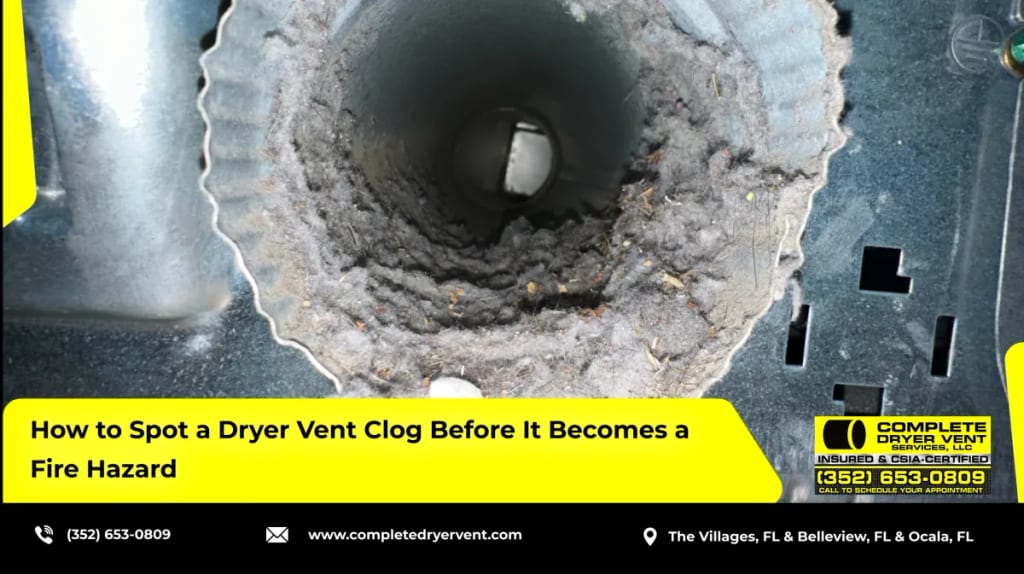
Lint doesn’t just collect in the trap. It travels down the duct and settles at bends, the exterior hood, and any low spots in flexible ducting. Over months of drying loads, this creates a partial dam that’s invisible from inside the laundry room.
⚠️ Common Mistake: Cleaning only the lint trap and assuming the vent itself is clear. The trap catches maybe 75% of lint — the rest travels downstream.
Homeowners in Oxford and The Villages often run dryers daily for guests or rental turnover, which accelerates buildup. We’ve opened vent hoods on these systems and found lint packed solid enough to block a fist.
Overheating Components Inside the Dryer
If the vent is clear but the smell persists, the issue may be internal. A worn drive belt, a failing motor bearing, or lint trapped inside the cabinet near the heating element can all produce a scorched smell without any vent obstruction at all.

Common Culprits Behind the Odor
Quick Answer: The two broad categories are airflow restriction (vent-side) and mechanical failure (machine-side). Airflow problems account for the majority of calls we run in Marion and Sumter counties.
Clogged Vents vs. Mechanical Failures
A clogged exhaust vent traps heat and moisture, so clothes come out damp, hot to the touch, and smelling faintly scorched. A mechanical failure — like a cracked belt rubbing against the drum — tends to produce a sharper, rubbery burning smell along with unusual noise.
| Symptom | Likely Cause | Recommended Action |
|---|---|---|
| Faint burnt smell, clothes still damp | Clogged vent, restricted airflow | Schedule vent cleaning |
| Sharp rubber/burning odor with noise | Worn belt or bearing | Call an appliance repair tech |
| Hot exterior cabinet, long dry times | Lint inside cabinet or blower wheel | Internal cabinet cleaning |
| Smell only on first load after storage | Dust burn-off, usually harmless | Monitor next cycle |
💡 Expert Insight: As a CSIA Certified Dryer Exhaust Technician, I’ve found that roughly 8 out of 10 burnt-smell calls in our service area trace back to the exterior vent hood, not the machine itself.
One homeowner in Wildwood called us after running two dry cycles just to get towels fully dry, with a faint scorched smell each time. We found the exterior vent flap crusted shut with dust and pollen, a common issue on homes near open fields.
Is It Dangerous When Clothes Smell Burnt After Drying?
Quick Answer: Yes — a burnt smell should always be treated as a potential fire warning sign, not a cosmetic nuisance. Dryers are one of the more overlooked home fire risks precisely because the smell is often dismissed.
Fire Risk Statistics You Should Know
According to the National Fire Protection Association, failure to clean dryers is a leading contributing factor in home dryer fires, and lint is the most common material first ignited. The U.S. Department of Energy also notes that restricted dryer venting reduces efficiency and increases wear on the appliance long before a fire risk becomes obvious.
📊 Data Point: Clogged vents don’t just create odor — they force the dryer to run hotter and longer, shortening the appliance’s lifespan and increasing energy use per load.
This is why we treat any burning smell report as urgent. Our burning smell safety guide covers exactly what to check before your next load.
How to Diagnose and Fix a Burnt Smell
Quick Answer: Start with the parts you can safely check yourself — lint trap, exterior vent hood, and drying time. If the smell continues after basic checks, stop using the dryer and call a professional.
DIY Checks You Can Do Today
- Unplug the dryer and remove the lint trap; wash it if lint sticks or water beads instead of soaking through.
- Go outside and check the exterior vent hood for lint, debris, or a flap that won’t open freely.
- Pull the dryer out (carefully) and inspect the flexible duct for kinks, crushing, or sagging low spots.
- Run a short test cycle and feel the exhaust air outside — it should feel warm, not scorching hot.
- Note whether drying time has crept up over the past few months, a classic sign of a slow clog.
✅ Quick Tip: If a load that used to take 40 minutes now takes over an hour, that’s often the vent talking before the smell ever shows up.
When to Call a Professional
If you’ve cleared the lint trap and vent hood and clothes still smell burnt after drying, the blockage is likely deeper in the duct run or the issue is mechanical. At that point, DIY tools like a shop vac usually can’t reach far enough, and disassembling internal dryer components without training risks damaging wiring or the heating element.
⚠️ Common Mistake: Using a long straightened wire hanger to "snake" the vent. This can puncture flexible ducting and create a bigger fire hazard than the clog itself.
Our team handles full-length duct cleaning and, when needed, clogged dryer vent repair for homes where the line has collapsed, disconnected, or degraded over time. For anything beyond the vent — belts, motors, thermal fuses — a licensed appliance repair technician is the right call.

Preventing Future Burnt Smells in Your Laundry
Quick Answer: Routine vent cleaning, shorter duct runs, and yearly inspections are the most reliable ways to stop a burnt smell from coming back. Most Central Florida homeowners only need this once a year unless they run heavy laundry volume.
We recommend scheduling professional dryer vent cleaning annually for typical households, and twice a year for larger families or rental properties in areas like The Villages where turnover is high. A clean vent also means shorter dry times, lower utility bills, and less strain on the appliance overall.
Simple Habits That Reduce Risk
Clean the lint trap before every load, not just when it looks full — a thin film still restricts airflow. Avoid overloading the drum, since packed clothes trap more lint and heat. Replace crushed or excessively long flexible ducting with rigid metal duct where possible, which resists lint accumulation far better.
💡 Expert Insight: Homes with vent runs longer than 25 feet, or with multiple 90-degree bends, need more frequent cleaning regardless of how new the dryer is. Length and bends matter more than dryer age.
If your home was affected by storm debris, a post-hurricane dryer vent inspection is worth scheduling before the vent gets used heavily again. And if you’re noticing early clog symptoms, our guide on clogged vent warning signs can help you catch problems before they reach the smell stage.
FAQ
Why does my dryer make clothes smell burnt even after cleaning the lint trap?
A clean lint trap only handles the first few feet of the exhaust path. Lint further down the duct, at bends, or at the exterior hood can still restrict airflow enough to scorch fabric and produce a burnt smell.
Is it safe to keep using a dryer if clothes smell burnt after dryer cycles?
No, you should stop use until the cause is identified. Continuing to run a dryer with a burnt smell risks overheating components further and increases fire potential, according to fire safety guidance from the NFPA.
Can a new dryer still make clothes smell burnt?
Yes, a new dryer can still overheat if the exterior vent, transition duct, or termination point was installed with kinks, excessive length, or blockages. The smell isn’t always about the machine’s age — it’s about airflow.
How often should dryer vent cleaning happen to prevent burnt odors?
Most households in Marion, Sumter, and Lake counties need cleaning once a year. Homes with pets, long vent runs, or heavy laundry use, common in busy Villages households, often benefit from twice-yearly service.
What does a dangerous burning smell from a dryer actually smell like?
It’s typically described as a scorched-dust or hot-metal smell, distinct from a normal "clean laundry" scent. If it’s sharp, chemical, or accompanied by smoke, unplug the dryer immediately and call a technician.
Does a burnt smell always mean I need a full vent replacement?
Not always. Many cases resolve with a thorough cleaning, but ducts that are crushed, disconnected, or made of unsafe materials may need exterior vent replacement rather than just cleaning.
Can lint buildup in the dryer vent actually start a house fire?
Yes. Lint is highly flammable, and the CPSC identifies dryer vent lint as a documented fire hazard when it accumulates near heat sources inside the exhaust path.
Final Thoughts
When clothes smell burnt after dryer cycles, it’s your home’s way of flagging restricted airflow or a mechanical issue before it becomes a real hazard. Basic DIY checks — lint trap, exterior hood, duct kinks — solve many cases, but a persistent odor means something deeper needs professional attention. As a CSIA Certified Dryer Exhaust Technician, I’d rather homeowners call too early than wait until smoke is involved.
Next steps:
- Check the lint trap and exterior vent hood today.
- Time your next drying cycle and compare it to normal.
- If the smell continues, stop using the dryer.
- Schedule a professional vent inspection with our dryer vent safety inspections team.
Our technicians serve Oxford, The Villages, Wildwood, Ocala, and the surrounding Central Florida communities, and we’re happy to walk you through what we find. Book your inspection today and stop guessing about that burnt smell.