
Air duct sealing in The Villages, FL is the process of closing gaps at dryer exhaust duct joints so lint, heat, and moisture stay inside the pipe instead of leaking into your attic or walls. When those seams open up, lint escapes, airflow drops, and dryer fire risk climbs. Many homeowners confuse this with whole-home HVAC duct sealing, but for dryer exhaust systems, the goal is simpler: a tight, continuous path from the dryer to the outside termination.
This matters more in Central Florida than most places realize. Humidity, attic heat, and rodent activity all work against loose duct connections. If you live in Oxford, The Villages, or Wildwood, seasonal humidity swings make unsealed joints even more prone to sagging, disconnecting, or trapping moisture that feeds mold growth.
📌 Key Takeaways
- Air duct sealing for dryer exhaust systems closes gaps at joints, elbows, and terminations to stop lint leaks.
- Unsealed ducts are a documented contributor to residential dryer fires, according to the U.S. Fire Administration.
- Warning signs include musty attic smells, visible lint near seams, and dryers that run hotter or longer than normal.
- Rigid or semi-rigid metal duct holds a seal far better than foil or vinyl duct in Florida’s humidity.
- A CSIA Certified Dryer Exhaust Technician can inspect, reseal, or replace duct sections in a single visit.
Jump to a section:
- What Duct Sealing Actually Means for Dryer Exhaust Systems
- Why Sealing Matters for Homes in The Villages Area
- Warning Signs Your Duct Needs Sealing or Repair
- What Happens During a Sealing Service Visit
- Choosing a Qualified Contractor Near You
- FAQ: Air Duct Sealing Questions Homeowners Ask
What Duct Sealing Actually Means for Dryer Exhaust Systems
Quick Answer: Dryer exhaust duct sealing closes the gaps at joints, elbows, and wall terminations so heat and lint travel straight outside. It is not the same service as sealing HVAC supply and return ducts, though the two get mixed up in search results constantly.
Homeowners often type "air duct sealing" when they really mean their dryer vent, because both systems run through walls and attics out of sight. HVAC duct sealing addresses conditioned air loss for comfort and energy bills. Dryer duct sealing addresses lint containment, airflow, and fire safety — a very different priority.
Dryer Vent Ducts vs. Home HVAC Air Ducts
Dryer ducts are single, dedicated pipes that carry hot, moist, lint-filled air from one appliance to one exterior point. HVAC ducts are a branching network moving conditioned air throughout the house. Sealing techniques, materials, and inspection frequency differ for each.
💡 Expert Insight: When a homeowner calls asking about "duct sealing," our first question is always which system they mean. Nine times out of ten in The Villages, it’s the dryer exhaust — usually after noticing a burning smell or slow-drying loads.
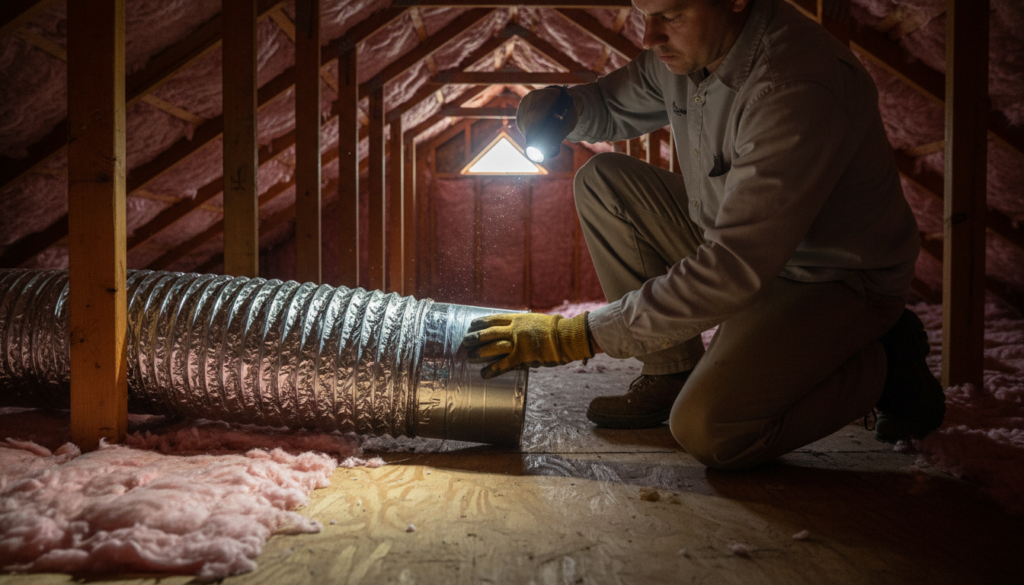
Why Sealing Matters for Homes in The Villages Area
Quick Answer: Loose duct joints let lint accumulate inside walls and attics, which raises fire risk and can trigger mold from trapped humidity. Sealed connections also help the dryer run efficiently, shortening cycle times and reducing wear.
According to the U.S. Fire Administration, failure to clean and maintain dryer exhaust systems is one of the leading contributing factors in home clothes dryer fires. A gap at a joint is functionally the same failure point as a clogged vent — air escapes where it shouldn’t, and lint settles where it can ignite.
Fire Risk from Leaky, Unsealed Duct Joints
When a joint separates even slightly, airflow slows at that point and lint drops out of suspension. Over months, that buildup becomes a fuel source sitting against wood framing or insulation. It’s a slow, quiet risk — no single load causes it, but repeated cycles do.
📊 Data Point: The Consumer Product Safety Commission has repeatedly flagged dryer duct maintenance as a preventable factor in residential fire incidents, reinforcing why sealed, unobstructed ductwork matters year-round.
Homes in Wildwood and Oxford with longer duct runs to an exterior wall are especially prone to sagging joints over time, simply because there’s more pipe and more connections that can loosen.
Warning Signs Your Duct Needs Sealing or Repair
Quick Answer: Musty attic odors, visible lint near duct seams, longer dry times, and a hot laundry room are the clearest signs a duct connection has failed. Catching these early avoids a full replacement later.
Symptom-to-Action Quick Reference
| Symptom | Likely Cause | Recommended Action |
|---|---|---|
| Musty smell near laundry room | Moisture escaping at a loose joint | Schedule an inspection and reseal |
| Lint visible in attic or wall cavity | Gap at duct connection or elbow | Reseal or replace the affected section |
| Dryer runs hot, clothes still damp | Airflow loss from leaks or clogs | Combine dryer cleaning with duct sealing |
| Rattling or whistling sound during cycles | Disconnected or crushed duct section | Request clogged dryer vent repair |
| Pests or debris near exterior vent | Damaged termination cap or seal | Consider exterior vent replacement |
⚠️ Common Mistake: Homeowners often patch a visible gap with household tape. Standard tape breaks down in attic heat within weeks, and the joint separates again — a proper sealing service uses foil-backed, UL-listed materials rated for the temperatures involved.
What Homeowners in Oxford and Lady Lake Notice First
In newer Oxford neighborhoods, the most common complaint is a hot laundry room, since many homes route ducts through tight closet spaces. In older Lady Lake homes, it’s usually lint appearing near the attic access hatch — a sure sign a joint upstream has opened.
What Happens During a Sealing Service Visit
Quick Answer: A proper visit includes a full duct inspection, cleaning of existing lint, resealing or replacing failed joints, and a final airflow test at the exterior termination. Most single-family homes are completed in under two hours.
- Inspect the full run from the dryer connection to the exterior vent, checking every joint and elbow.
- Clean accumulated lint so the technician can see the true condition of each seam, not just surface debris.
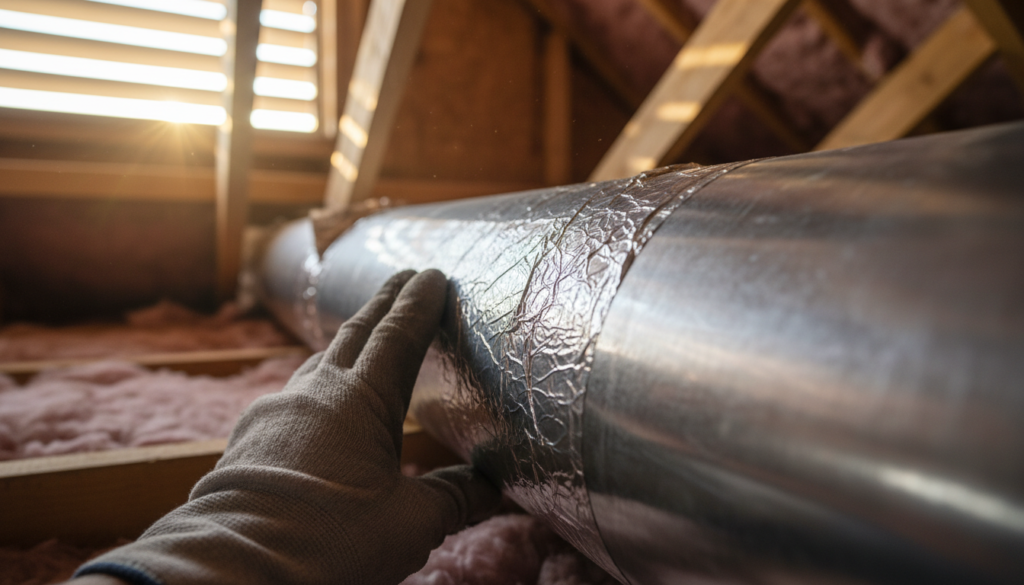
- Reseal or replace any section with gaps, using rigid metal duct and foil tape or mastic rated for exhaust temperatures.
- Test airflow at the termination to confirm the seal held and exhaust is moving freely.
- Document findings, including photos of any sections replaced, for the homeowner’s records.
DIY Sealing vs. Professional Service
| Factor | DIY Approach | Professional Service |
|---|---|---|
| Materials used | Household tape, often not heat-rated | UL-listed foil tape or mastic |
| Attic/roof access | Limited by ladder height and safety | Full-length inspection with proper tools |
| Diagnosis accuracy | Visual only, easy to miss hidden gaps | Airflow testing confirms the fix worked |
| Fire code compliance | Not verified | Checked against Florida code requirements |
| Time investment | 1-3 hours, results vary | Under 2 hours, typically |
I’ve walked into more than one attic where a homeowner’s tape repair looked fine from below but had already peeled at the back of the joint — the kind of gap you only catch with a hands-on inspection.
✅ Quick Tip: Ask any technician whether they’ll use mastic or foil-rated tape, not standard duct tape. If they can’t answer clearly, get a second opinion before booking.
Choosing a Qualified Contractor Near You
Quick Answer: Look for a technician holding CSIA certification, a clear explanation of materials used, and a willingness to show you the sealed sections before leaving. Certification signals training specific to exhaust systems, not general HVAC work.
Our technicians are CSIA Certified Dryer Exhaust Technicians, a credential from the Chimney Safety Institute of America that focuses specifically on dryer exhaust systems — inspection, cleaning, sealing, and code-compliant installation. It’s a narrower, more relevant qualification than a general handyman license for this specific job.
Questions to Ask Before Hiring
Ask what material they use to seal joints, whether they test airflow afterward, and whether they inspect the full run or only the accessible sections. A contractor confident in their process will answer all three without hesitation.
💡 Expert Insight: We always recommend pairing a sealing visit with routine dryer vent safety inspections, especially in homes older than ten years, since seals degrade gradually and rarely announce themselves until a symptom shows up.
Homeowners near Leesburg and throughout our service area often ask about combining sealing with a full dryer vent install service when duct runs are outdated or undersized for current code.
FAQ: Air Duct Sealing Questions Homeowners Ask
What does air duct sealing in The Villages FL actually fix?
It closes gaps at duct joints and elbows so hot, lint-filled exhaust air travels directly outside instead of leaking into the attic. This reduces fire risk, prevents musty odors, and helps the dryer run more efficiently.
How is duct sealing different from dryer vent cleaning?
Cleaning removes lint already built up inside the duct, while sealing repairs the physical connections so lint stops escaping in the first place. Most homes benefit from having both done in the same visit.
How often should dryer exhaust ducts be resealed?
Most homes need reinspection every one to two years, though homes with long duct runs or frequent laundry use may need more frequent checks. A quick visual and airflow test during routine maintenance usually catches problems early.
Can I seal a dryer duct myself with foil tape from a hardware store?
Standard hardware store tape often isn’t rated for sustained exhaust heat and tends to fail within months in Florida attics. A proper seal uses UL-listed foil tape or mastic designed specifically for this temperature range.
Is air duct sealing required by Florida building code?
Florida code addresses duct material, length, and termination requirements rather than sealing directly, but a leaking joint can violate the intent of those code sections. Our Florida building code guide breaks down the specific requirements in plain language.
Do older homes in Wildwood need duct sealing more often?
Older homes often have more duct joints, aging materials, and attic conditions that accelerate seal breakdown, so yes — they tend to need attention sooner than newer construction. A one-time inspection is the easiest way to know where a specific home stands.
What’s the cost difference between resealing and full duct replacement?
Resealing a few joints is typically far less expensive than replacing an entire duct run, and it’s often sufficient if the underlying material is still in good condition. A technician can usually tell within the first few minutes of inspection which option fits.
Final Thoughts
Air duct sealing in The Villages, FL isn’t a cosmetic fix — it’s a direct line of defense against lint fires, wasted energy, and musty attic air. The good news is that most homes only need targeted resealing, not a full duct replacement, once a technician identifies the failed joints. Catching the warning signs early, from odd smells to longer dry times, keeps the fix simple and the cost lower.
Next steps:
- Check your laundry room and attic access for musty odors or visible lint.
- Note how long your dryer takes to finish a normal load compared to a year ago.
- Schedule an inspection with a CSIA Certified Dryer Exhaust Technician before the issue grows.
- Ask specifically about sealing materials and airflow testing when you book.
Our team holds CSIA Certified Dryer Exhaust Technician credentials and serves homeowners throughout Oxford, The Villages, Wildwood, Leesburg, and Lady Lake. Schedule your air duct sealing inspection today through our booking page and get a straight answer on what your ducts actually need.

