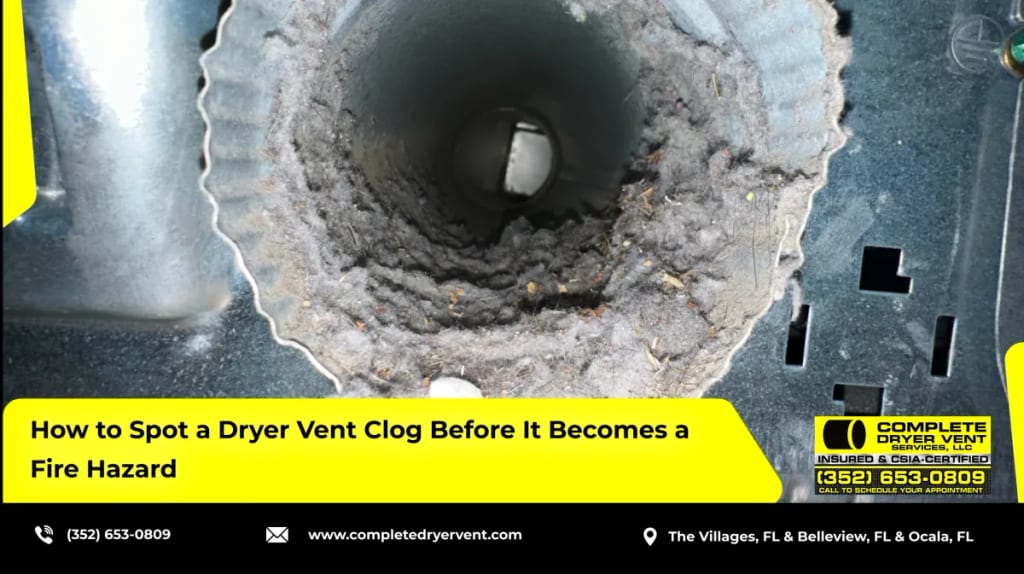
Clogged dryer vent repair is the fastest way to stop overheating, cut drying times, and lower your home’s fire risk. A blocked vent traps hot, lint-filled air inside the duct, forcing your dryer to work harder and run hotter with every cycle. Most homeowners don’t realize a clog exists until clothes take two or three cycles to dry, or a burning smell drifts through the laundry room. As a CSIA Certified Dryer Exhaust Technician working across Marion, Lake, and Sumter counties, I’ve opened vents packed with lint, birds’ nests, and even hardened rodent debris. The good news: once you know the warning signs and understand what a proper repair involves, this is one of the most preventable hazards in your home.
📌 Key Takeaways
- Drying times over 45 minutes and a hot dryer top are the two clearest clog signs.
- Lint buildup inside the duct is the #1 cause, followed by crushed or kinked flexible hose.
- DIY lint trap cleaning helps, but it never reaches lint packed deep inside the vent run.
- Professional clogged dryer vent repair typically restores full airflow in under 90 minutes.
- Homes in The Villages, Wildwood, and Oxford should schedule annual inspections due to long duct runs and shared attic spaces.
Jump to a section:
- Spot the Warning Signs Early
- Understand What Causes Vent Clogs
- DIY Fixes vs. Calling a Professional
- What Professional Repair Actually Involves
- Protect Your Home After the Repair
- Frequently Asked Questions
Spot the Warning Signs Early
Quick Answer: Longer drying cycles, a hot laundry room, and a musty or burning smell are the three earliest signs of a blocked dryer vent. Catching these early makes clogged dryer vent repair faster and cheaper.
Most families ignore the small clues for months. A load that used to finish in 35 minutes now takes over an hour, but it’s easy to blame the dryer instead of the vent. That assumption often costs homeowners a premature dryer replacement when the real problem was airflow.
Physical Signs Inside the Laundry Room
Check the outside of the dryer cabinet after a cycle. If it’s noticeably hot to the touch, air isn’t escaping the way it should. A burning or musty smell, visible lint around the door seal, or condensation on nearby walls are all red flags worth addressing immediately.
⚠️ Common Mistake: Many homeowners clean only the lint trap and assume the vent is clear. The trap catches maybe 25% of total lint; the rest travels into the duct and builds up over years.
Exterior Signs at the Vent Hood
Step outside and look at the exterior termination while the dryer runs. Weak or no airflow, a flapper that won’t open fully, or visible lint clinging to the hood all point to a clog somewhere in the run. Our 5 warning signs guide breaks down each symptom in more detail.

Understand What Causes Vent Clogs
Quick Answer: Lint accumulation is the leading cause of vent clogs, but crushed flexible hose, long duct runs, and bird or rodent nests are close behind in Central Florida homes.
Every load of laundry sheds fibers that the lint trap can’t fully capture. Over months and years, that residue clings to the inside walls of the duct, gradually narrowing the passage until air barely moves.
Lint Buildup and Duct Length
Homes with long vent runs, common in two-story houses across Leesburg and Clermont, are especially vulnerable because lint has more surface area to collect on. According to the U.S. Consumer Product Safety Commission, failure to clean dryer vents is a leading contributor to residential dryer fires nationwide.
📊 Data Point: The National Fire Protection Association reports that clothes dryers and washing machines are involved in thousands of U.S. home structure fires every year, with failure to clean listed as the top factor.
Kinked Hoses and Wildlife Intrusion
Flexible foil or vinyl hose behind the dryer can crush easily when the appliance is pushed too close to the wall. Outdoors, uncapped or damaged vent hoods invite birds and rodents looking for shelter, which is why we recommend a vent cover upgrade alongside any repair.
💡 Expert Insight: On a recent job in Oxford, we found a bird’s nest completely blocking a rigid metal duct behind a dryer box installation. The homeowner’s drying times had quietly doubled over three months before anyone noticed.
DIY Fixes vs. Calling a Professional
Quick Answer: DIY cleaning helps with short, straight vent runs, but professional clogged dryer vent repair is safer and more thorough for long runs, roof terminations, or any sign of lint packed deep in the duct.
Homeowners can reasonably handle a few basic tasks themselves. Anything beyond the first few feet of duct, though, usually requires proper tools and training to do safely.
What You Can Safely Check Yourself
Unplug the dryer, pull it away from the wall, and inspect the first few feet of hose for kinks or visible lint. Vacuum what you can reach and confirm the exterior flapper opens freely. These quick checks catch obvious issues before they escalate.
| Task | DIY Feasible? | Professional Recommended? |
|---|---|---|
| Cleaning lint trap and first 3 ft of hose | Yes | Optional |
| Clearing lint deep inside 15+ ft duct runs | No | Yes |
| Roof or second-story vent terminations | No | Yes |
| Replacing crushed or damaged hose | Sometimes | Yes for rigid duct |
| Diagnosing airflow restriction with meter | No | Yes |
✅ Quick Tip: If your dryer still takes over an hour after a full DIY cleaning, the clog is likely beyond reach and it’s time to call a professional.
When the Clog Is Beyond Reach
Rigid metal ductwork, attic runs, and rooftop terminations require specialized brushes, rotary tools, and often a second technician on the roof. This is where a licensed, CSIA Certified Dryer Exhaust Technician earns their keep, using calibrated equipment to confirm airflow is fully restored rather than guessing.

What Professional Repair Actually Involves
Quick Answer: A proper repair includes a full inspection, mechanical lint removal, hardware fixes like re-securing loose joints, and a final airflow test to confirm the problem is solved.
Walking into a service call without a clear process leads to half-finished jobs. A thorough technician treats the vent as one connected system, not just the visible section behind the dryer.
Step-by-Step Repair Process
- Inspect the entire run from the dryer to the exterior termination.
- Measure airflow with a meter to confirm the extent of the blockage.
- Clear lint mechanically using rotary brushes or vacuum extraction, not just a shop vac.
- Repair or replace crushed hose, damaged joints, or a failing exterior vent cover.
- Re-test airflow to confirm the fix meets manufacturer specifications.
Repairs That Go Beyond Cleaning
Sometimes the clog reveals a design flaw, not just dirt. Vent runs that are too long, have too many bends, or were never properly boxed in during construction may need a dryer vent box installation or a full exterior vent replacement to prevent the clog from recurring.
⚠️ Common Mistake: Replacing a dryer because it "runs too hot" without ever checking the vent. In many cases the appliance is fine; the exhaust path is the actual problem.
Protect Your Home After the Repair
Quick Answer: Annual dryer vent cleaning, prompt lint trap maintenance, and a properly capped exterior termination are the three habits that keep clogs from coming back.
Repair solves today’s problem, but prevention keeps it from returning next year. This matters even more in humid Central Florida, where moist lint compacts faster than in drier climates.
A Realistic Maintenance Schedule
Most households do well with one full professional cleaning per year, though larger families or homes with pets may need service every six to eight months. The U.S. Fire Administration recommends regular dryer vent maintenance as a core part of home fire prevention.
| Household Type | Recommended Cleaning Frequency |
|---|---|
| 1-2 people, standard vent run | Every 12 months |
| Family of 4+, daily laundry | Every 6-8 months |
| Long or roof-terminated vent runs | Every 6 months |
| Homes with pets (extra shedding) | Every 6-9 months |
💡 Expert Insight: Homeowners in The Villages and Wildwood often have longer attic vent runs due to home layout, which is why we lean toward the shorter side of that maintenance window there.
After a Storm or Hurricane
Central Florida’s storm season can dislodge exterior vent covers or pack debris into the termination point. A quick post-hurricane vent inspection is worth scheduling before you run the dryer again after major weather. The Florida building code guide also outlines the minimum standards vent installations must meet statewide.

Frequently Asked Questions
How do I know if my dryer vent is clogged?
The clearest signs are drying times over 45 minutes, a hot dryer exterior after a cycle, and a burning or musty smell in the laundry room. Weak airflow at the exterior vent hood while the dryer runs is also a strong indicator.
Can I fix a clogged dryer vent myself?
You can handle basic cleaning of the lint trap and the first few feet of hose yourself. Deep clogs in long runs, roof terminations, or rigid ductwork usually require professional clogged dryer vent repair with proper tools.
How much does dryer vent cleaning cost in Ocala or Leesburg?
Pricing varies by vent length, number of bends, and whether roof access is needed, so it’s best to request a quote based on your specific home. Homes with straightforward single-story runs are typically less involved than those with attic or roof terminations.
How often should dryer vents be cleaned in Florida?
Most Central Florida homes benefit from cleaning once a year, though households with pets, daily laundry loads, or long duct runs often need service every six to eight months. Humidity here can cause lint to compact faster than in drier regions.
What happens if I ignore a clogged dryer vent?
Ignoring a clog increases fire risk, raises energy bills from longer drying cycles, and shortens your dryer’s lifespan due to overheating. Left unaddressed long enough, it can also void certain manufacturer warranties tied to proper ventilation.
Is dryer vent cleaning the same as clogged dryer vent repair?
Cleaning removes lint buildup, while repair addresses damaged hose, crushed sections, or failing exterior hardware in addition to clearing debris. A full service call often includes both when a technician finds structural issues during inspection.
Do you offer dryer vent cleaning near Oxford, The Villages, or Wildwood?
Yes, these are core areas of our Central Florida service territory, along with surrounding communities like Leesburg and Clermont. Homes in these areas often have longer vent runs, making regular inspection especially worthwhile.
Final Thoughts
A clogged vent is one of the most preventable fire hazards in any Central Florida home, and clogged dryer vent repair usually takes far less time and money than most homeowners expect. Catching the warning signs early, from longer drying cycles to a hot dryer cabinet, gives you a real chance to fix the problem before it becomes dangerous. DIY cleaning has its place for simple, short vent runs, but deep clogs and roof terminations call for a trained technician with the right equipment. As always, pair any repair with an annual maintenance schedule to keep the problem from coming back.
Next steps:
- Unplug your dryer and check the first few feet of hose for visible lint or kinks.
- Step outside and confirm the exterior vent flapper opens fully during a cycle.
- Note how long your last few loads took to dry completely.
- Schedule a professional inspection if drying times exceed 45 minutes.
- Book annual service to prevent the clog from returning.
Complete Dryer Vent Services, LLC is a CSIA Certified Dryer Exhaust Technician serving Marion, Lake, Sumter, Citrus, and Alachua counties, including Oxford, The Villages, and Wildwood. Schedule your clogged dryer vent repair inspection today and breathe easier knowing your home is protected.