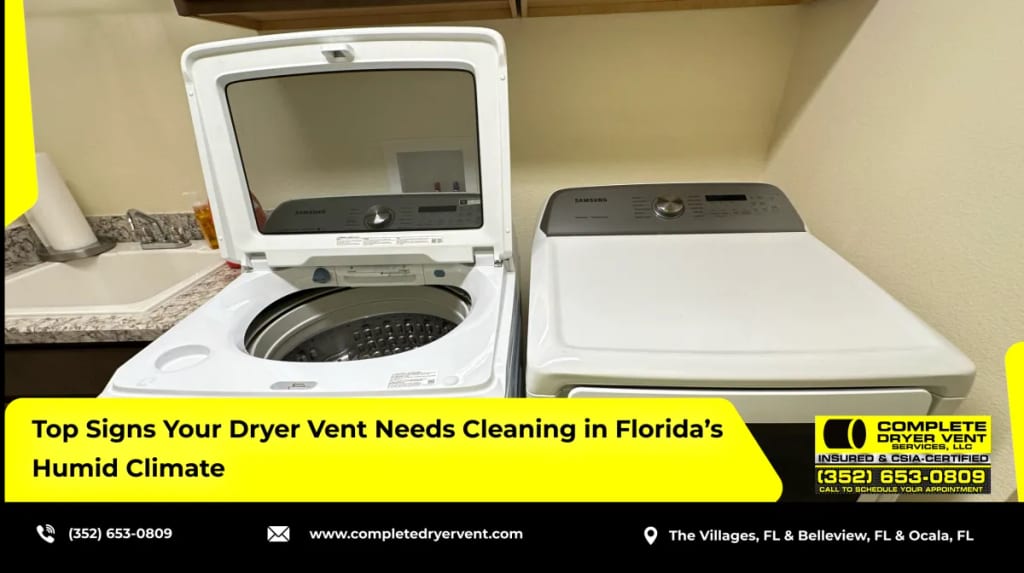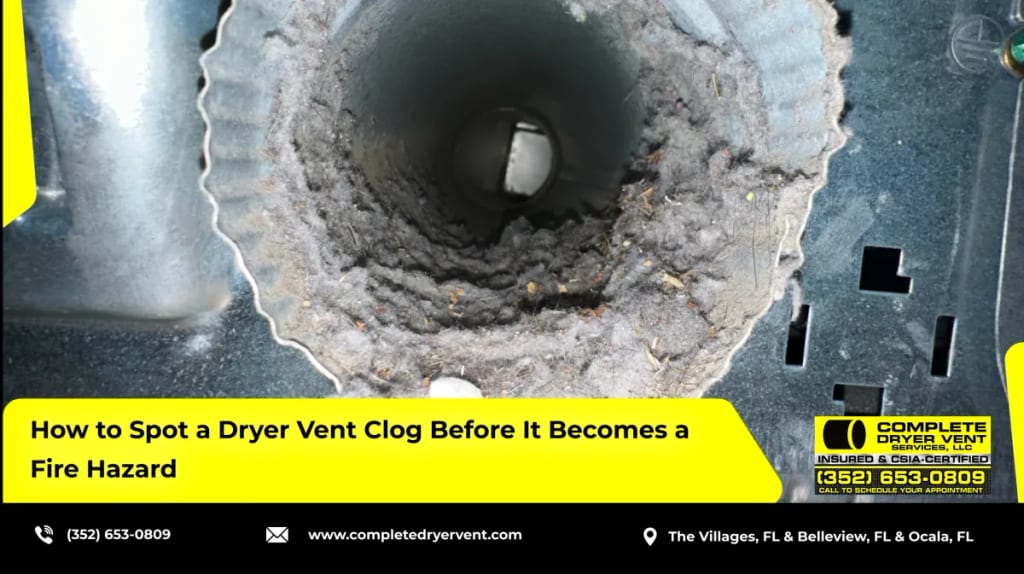
Dryer vent cleaning Florida homeowners schedule every year isn’t a luxury — it’s a fire-prevention step that too many households skip. A clogged vent traps heat, moisture, and lint inside your dryer cabinet, and in Florida’s humid climate that buildup turns into a sticky, flammable mat faster than you’d expect. The direct fix is simple: have a certified technician clear the entire vent run, not just the lint trap, at least once a year.
I’ve crawled under enough Florida homes near Leesburg and The Villages to know that a vent that "looks fine" from the outside can be 80% blocked at the elbow behind the wall. Homeowners usually call after noticing longer dry times or a burning smell — but by then, the risk has already been building for months. This guide walks through why it matters, what the warning signs look like, and how to choose a qualified pro in Central Florida.
📌 Key Takeaways
- Clean your dryer vent at least once a year; twice a year for households with pets or heavy laundry loads.
- Longer dry times and a hot laundry room are the two earliest warning signs of a clog.
- Florida’s humidity accelerates lint compaction, making local cleaning schedules stricter than national averages.
- CSIA Certified Dryer Exhaust Technicians follow standardized safety protocols, not guesswork.
- DIY vent brushes only reach the first few feet — professional equipment clears the full run.
Table of Contents
- Why Dryer Vent Cleaning Matters for Florida Homes
- How Florida’s Climate Affects Your Vent System
- Warning Signs You Shouldn’t Ignore
- DIY vs. Professional Dryer Vent Cleaning
- What Happens During a Professional Cleaning
- Choosing the Right Dryer Vent Cleaners Near You
- FAQ: Dryer Vent Cleaning Florida Homeowners Ask Most
Why Dryer Vent Cleaning Matters for Florida Homes
Quick Answer: Lint buildup restricts airflow, raises internal dryer temperatures, and is a leading contributor to residential dryer fires. Regular cleaning restores airflow, cuts drying time, and lowers fire risk.
According to the National Fire Protection Association, failure to clean dryers is the leading factor in home clothes dryer fires nationwide. Lint is highly combustible, and once it accumulates in a vent run, it only takes a spark of trapped heat to ignite it. That risk is why routine dryer cleaning belongs on the same maintenance list as smoke detector checks.
The Hidden Cost of a Clogged Vent
A blocked vent doesn’t just threaten safety — it also forces your dryer to work harder. The U.S. Consumer Product Safety Commission notes that restricted airflow increases energy use and appliance wear. Homeowners in Ocala and Wildwood often tell us their electric bills dropped noticeably after their first professional cleaning.
📊 Data Point: According to CPSC data, clothes dryers are involved in thousands of reported home fires annually, with lint and vent obstruction cited as recurring causes.
How Florida’s Climate Affects Your Vent System
Quick Answer: Florida’s high humidity causes lint to clump and stick to vent walls faster than in drier climates, shortening the safe interval between cleanings.
Unlike arid states where lint stays loose and dry, Central Florida’s moisture-heavy air turns dust and fiber into a paste-like residue. This is especially true in Leesburg, Clermont, and Dade City, where afternoon humidity spikes daily for much of the year.
Why Annual Isn’t Always Enough
Households with pets, teenagers, or long dryer vent runs — common in Villages-area homes with garage laundry setups — often need cleaning every six to nine months. A longer duct run simply gives lint more surface area to cling to.
✅ Quick Tip: If your laundry room feels noticeably warmer than the rest of the house during a drying cycle, that’s often the first sign airflow is restricted.

Warning Signs You Shouldn’t Ignore
Quick Answer: Longer dry times, a burning smell, a hot dryer exterior, and visible lint around the vent hood are the four clearest signals you need professional cleaning now.
Most homeowners don’t notice a clog gradually — they notice it when clothes stop drying in one cycle. That single symptom is usually enough reason to schedule service before it becomes a safety issue.
Common Symptoms and What They Mean
| Symptom | Likely Cause | Recommended Action |
|---|---|---|
| Clothes take 2+ cycles to dry | Partial vent blockage | Schedule cleaning within 1-2 weeks |
| Burning smell during operation | Lint contacting heating element | Stop use immediately, call a pro |
| Dryer exterior hot to the touch | Restricted exhaust airflow | Schedule inspection promptly |
| Musty smell in laundry room | Moisture trapped in vent | Full vent cleaning recommended |
| Lint visible at exterior vent hood | Vent nearing full blockage | Cleaning needed soon |
For a deeper breakdown of these symptoms, our guide on clogged vent signs covers each in detail, and our burning smell safety guide walks through what to do if you smell smoke.
⚠️ Common Mistake: Assuming lint trap cleaning alone is enough. The trap only catches a fraction of lint — the rest travels down the full vent run.
DIY vs. Professional Dryer Vent Cleaning
Quick Answer: DIY brush kits can clear the first few feet of straight ducting, but they rarely reach elbows, long runs, or roof terminations — which is where most Florida clogs actually form.
A flexible brush from a hardware store is fine for light surface lint near the dryer itself. It won’t reach a 20-foot run with two 90-degree turns, which is a typical layout in many Sumter and Marion County homes.
Where DIY Falls Short
Professional dryer vent cleaners near me searches spike every spring for a reason — homeowners try the DIY route first, then realize airflow still isn’t right. Professional-grade rotary brushes and negative-air systems clear the entire run, including hard-to-reach roof and wall terminations.
| Factor | DIY Cleaning | Professional Cleaning |
|---|---|---|
| Reach | First 3-6 feet | Full vent run, all elbows |
| Equipment | Basic brush kit | Rotary brush + vacuum system |
| Fire risk reduction | Partial | Comprehensive |
| Time investment | 30-60 minutes | Typically under an hour, done right |
| Inspection included | No | Yes, with CSIA-trained technician |
💡 Expert Insight: As a CSIA Certified Dryer Exhaust Technician, I’ve found that even "recently DIY-cleaned" vents often still have significant lint packed at the first elbow — the spot a straight brush can’t reach.
What Happens During a Professional Cleaning
Quick Answer: A thorough visit includes an inspection, full vent-run brushing, vacuum extraction of loosened lint, and a final airflow test to confirm the fix worked.
When we arrive for dryer vent cleaning in Leesburg, Clermont, or Ocala, the process starts with disconnecting the dryer and inspecting the vent hood, transition duct, and wall termination. Every home’s layout is a little different, so the inspection matters as much as the cleaning itself.
The Cleaning Process, Step by Step
- Inspect the interior dryer cabinet and lint trap housing.
- Disconnect the transition duct and check for crushed or kinked sections.
- Run rotary brushes through the full vent length, from dryer to exterior termination.
- Vacuum-extract all loosened lint and debris.
- Reconnect the system and test airflow to confirm proper exhaust.
For homes with cabinet buildup beyond the vent itself, our internal dryer cabinet cleaning guide explains why the inside of the machine matters too. If the inspection reveals a crushed duct or damaged termination, exterior vent replacement may be recommended before recleaning is even worthwhile.

✅ Quick Tip: Ask any technician you hire whether they test airflow after cleaning — a visual brush-through without a final airflow check leaves the job half-finished.
Choosing the Right Dryer Vent Cleaners Near You
Quick Answer: Look for CSIA certification, transparent pricing, and a technician willing to explain what they find — not just a quick in-and-out visit.
When homeowners search for the best companies for dryer vent repair, certification is the detail most often overlooked. The Chimney Safety Institute of America (CSIA) trains and certifies dryer exhaust technicians on national safety standards, giving you a benchmark beyond word of mouth.
Questions to Ask Before You Book
Ask whether the company services your specific area — we cover Alachua, Citrus, Lake, Marion, and Sumter counties, with a strong focus on Oxford, The Villages, and Wildwood. Ask how they handle roof-terminated vents, since not every crew is equipped for that work safely.
📊 Data Point: The Department of Energy notes that a clogged dryer vent can increase energy consumption significantly by forcing longer, less efficient drying cycles.
If your home needs more than a cleaning — a crushed duct, an outdated vent box, or a rerouted run after a renovation — see our pages on dryer vent box installation and clogged dryer vent repair for next steps. Our full Florida dryer vent cleaning guide also breaks down regional code requirements in more depth.
FAQ: Dryer Vent Cleaning Florida Homeowners Ask Most
How often should I schedule dryer vent cleaning in Florida?
Most Florida homes need cleaning once a year, but households with pets, long vent runs, or heavy laundry use often benefit from cleaning every six to nine months due to humidity-driven lint buildup.
How much does dryer vent cleaning cost in Leesburg or Ocala?
Pricing varies by vent length, roofline access, and whether repairs are needed, so an accurate quote requires a quick inspection; most standard residential cleanings are a modest, one-time seasonal expense.
What’s the difference between dryer vent cleaning and air duct cleaning?
Dryer vent cleaning specifically targets the exhaust path that carries hot, moist air outside during drying, while an air duct cleaning dryer vent service may bundle HVAC duct work — they address different systems entirely.
Can a clogged dryer vent actually cause a house fire?
Yes — trapped lint is highly flammable, and restricted airflow raises internal dryer temperatures, which is why fire safety organizations list dryer maintenance as a leading prevention step.
Do I need a permit for dryer vent box installation in Florida?
Requirements vary by county, but Florida building code does address vent termination and clearance rules; our Florida building code guide covers what’s typically required.
Is CSIA certification actually important for this work?
Yes — a CSIA Certified Dryer Exhaust Technician has been trained on standardized inspection and cleaning protocols, which means a more consistent, safety-focused visit than an uncertified crew.
What areas near The Villages does Complete Dryer Vent Services cover?
We regularly serve Oxford, The Villages, Wildwood, and surrounding communities across Lake, Sumter, and Marion counties, with scheduling available through our service areas page.
Final Thoughts
Dryer vent cleaning Florida homes rely on isn’t complicated, but it is easy to postpone until a warning sign forces the issue. The humidity, long vent runs, and heavy year-round laundry use in Central Florida all add up to a real, preventable fire and efficiency risk. A short annual visit from a certified technician is a small investment against a serious hazard.
- Check your dryer for warning signs — longer dry times, heat, or odor.
- Confirm when your vent was last professionally cleaned.
- Schedule an inspection with a CSIA Certified Dryer Exhaust Technician.
- Ask about full-run cleaning, not just lint trap service.
As a CSIA Certified Dryer Exhaust Technician serving Oxford, The Villages, Wildwood, and the surrounding Central Florida counties, we’re ready to inspect your vent and clear it properly. Book your dryer vent cleaning appointment today and breathe easier knowing your home is protected.