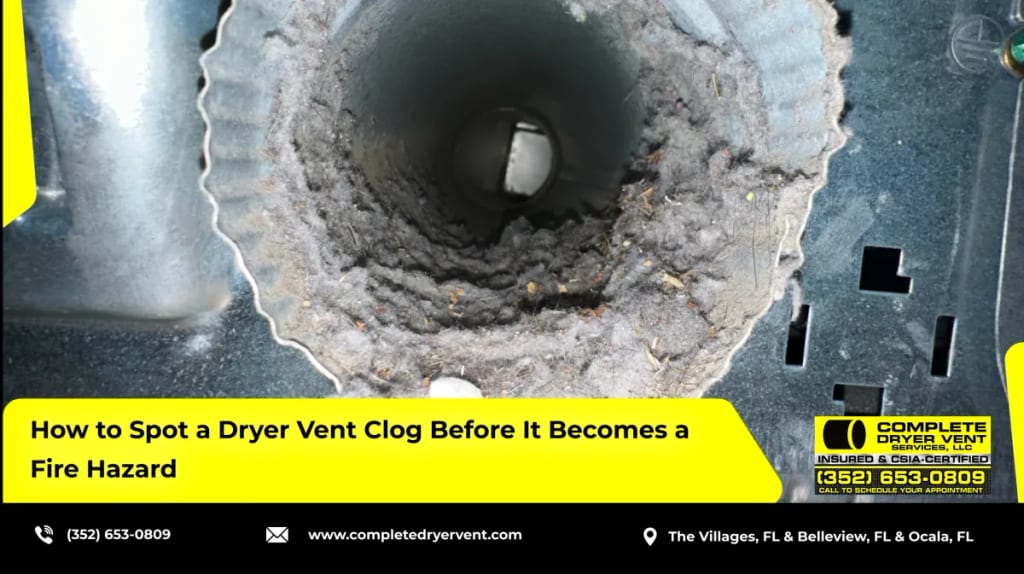
If your dryer smells like burning, stop the cycle and unplug the machine before you do anything else. In most cases the odor comes from trapped lint overheating inside the vent, a worn belt, or melting plastic near the drum — all of which can become fire hazards if ignored. This guide walks through the most common causes, what’s safe to check yourself, and when it’s time to call a CSIA Certified technician instead of guessing.
We’ve inspected hundreds of vent systems across Marion, Sumter, and Lake counties, and a burning smell is one of the top reasons homeowners call us in a panic. The good news: most causes are fixable, and almost all are preventable with routine maintenance.
📌 Key Takeaways
- A burning smell almost always means excess heat is building up somewhere it shouldn’t — lint, rubber, or plastic.
- Never run the dryer again until you’ve identified the source; overheated lint is a leading cause of house fires.
- Burnt rubber usually points to a worn belt or motor bearing; burnt plastic often means melted internal wiring or housing.
- The U.S. Fire Administration reports thousands of dryer-related fires annually, many tied to clogged vents.
- A professional dryer vent cleaning removes the buildup that causes most burning smells in the first place.
Jump to a Section
- What It Means When Your Dryer Smells Like Burning
- Common Causes Behind the Smell
- Is It Safe to Keep Using the Dryer?
- Burning Rubber vs. Burnt Plastic vs. Smoke
- What to Do Right Now
- When to Call a Professional
- Preventing Future Burning Smells
- FAQ
What It Means When Your Dryer Smells Like Burning
Quick Answer: A burning smell means heat is concentrating somewhere abnormal — usually trapped lint, a strained motor, or a component rubbing against another part. It’s your dryer’s way of warning you before something worse happens.
Modern dryers generate a lot of heat by design, but that heat is supposed to exit safely through the vent duct. When lint restricts airflow, heat has nowhere to go and starts baking nearby plastic housings, rubber belts, or electrical insulation. That’s the source of the acrid smell many homeowners describe as burnt rubber or melting plastic.
First-Sentence Symptoms Homeowners Report
Most calls we get start the same way: "my dryer smells burnt inside" or "it smells like something is smoking." These aren’t just annoying odors — they’re diagnostic clues. The specific smell often tells a technician exactly where to look before ever opening the cabinet.
💡 Expert Insight: As a CSIA Certified Dryer Exhaust Technician, I always ask homeowners to describe the smell precisely — rubbery, plasticky, or smoky odors each point to different failure points inside the machine.
Common Causes Behind the Smell
Quick Answer: The three leading causes are lint buildup restricting airflow, a worn belt or bearing generating friction heat, and melting plastic components near the drum motor. Each has a distinct smell signature.
Lint and Debris Buildup
Lint is highly flammable and accumulates in the trap, the duct, and inside the cabinet itself over time. When it packs tightly enough to block airflow, internal temperatures spike well beyond normal operating range. This is the single most common reason a dryer smells burnt inside, according to fire safety data from the National Fire Protection Association.
Burnt Rubber or Melting Plastic Smells
A dryer that smells like burning rubber usually has a worn drive belt slipping against the drum or a failing idler pulley. Melting plastic, on the other hand, often means a plastic blower wheel or duct connector is contacting a hot motor housing. Both situations require the cabinet to be opened for a proper diagnosis.
⚠️ Common Mistake: Homeowners often assume a burning smell will "go away on its own" after one cycle. In reality, the underlying friction or blockage almost always gets worse with continued use.
Overheating Motor or Electrical Components
Less commonly, a dryer smells like cigarette smoke or an electrical odor because wiring insulation is degrading from sustained overheating. This is the most serious scenario and should never be run through another cycle. If you smell anything resembling burning wires, shut off the breaker, not just the dryer itself.
Is It Safe to Keep Using the Dryer?
Quick Answer: No — if your dryer smells like burning, stop using it until the cause is identified. Continuing to run it risks a house fire, especially if lint has ignited inside the duct or cabinet.
According to the U.S. Consumer Product Safety Commission, dryers and washing machines are involved in thousands of residential fires each year, and clogged exhaust systems are a recurring factor. That statistic isn’t meant to scare you — it’s meant to explain why we take every burning-smell call seriously, even when the fix turns out to be minor.
📊 Data Point: Federal fire agencies consistently list failure to clean dryer vents as one of the top contributing factors in home dryer fires, underscoring why routine maintenance matters as much as reacting to smells.
In my own service calls around Wildwood and The Villages, I’ve found fully compacted lint tunnels behind dryers that hadn’t been vented properly in years. The homeowners had no idea anything was wrong until the burning smell appeared — by then, the vent was already a fire risk.
Burning Rubber vs. Burnt Plastic vs. Smoke: What’s the Difference?
Quick Answer: The type of smell narrows down the cause before a technician even opens the machine. Use the table below as a first-pass diagnostic guide.
| Smell Type | Likely Cause | Recommended Action |
|---|---|---|
| Burning rubber | Worn belt, idler pulley, or roller | Stop use; inspect drive components |
| Burnt plastic | Melting blower wheel or duct connector | Stop use; open cabinet for inspection |
| Smoke or char | Ignited lint inside vent or cabinet | Turn off breaker; call a professional immediately |
| Hot, dusty smell | Heavy lint buildup, restricted airflow | Schedule a professional vent cleaning |
| Cigarette-like odor | Overheated wiring insulation | Turn off breaker; do not restart dryer |
✅ Quick Tip: Write down the exact smell and when it occurs — start of cycle, mid-cycle, or only on high heat. That detail speeds up diagnosis significantly.
Why the Smell Sometimes Comes and Goes
Intermittent burning smells are often tied to load size or heat setting rather than a constant failure. A partially clogged vent might only overheat on bulky loads like comforters. That inconsistency is exactly why the issue tends to get ignored until it becomes a bigger, and costlier, repair.
What to Do Right Now
Quick Answer: Turn off the dryer immediately, unplug it or shut off the breaker, and avoid running it again until the smell’s source is confirmed. Follow these steps in order.
- Stop the cycle and unplug the dryer, or shut off the circuit breaker if smoke is present.
- Check and clean the lint trap completely, including the screen mesh.
- Look behind the dryer for a crushed, disconnected, or heavily clogged exhaust duct.
- Feel the exterior vent cover outside your home — weak or no airflow signals a blockage.
- If the smell persists after cleaning the trap, do not restart the dryer; call a professional instead.
💡 Expert Insight: A clean lint trap is not the same as a clean vent system. Lint travels well past the trap and settles in the duct, the transition hose, and the exterior termination.
When to Call a Professional
Quick Answer: Call a certified technician if the smell returns after cleaning the trap, if you see scorch marks, or if you can’t visually confirm the duct is clear. DIY fixes only address part of the problem.
DIY lint trap cleaning helps, but it doesn’t reach compacted lint deep in the exhaust run, especially in homes with long or rerouted duct paths — common in older Marion County homes. A full inspection checks the belt, motor housing, blower wheel, and the entire vent path from drum to exterior termination.
DIY vs. Professional Service
| Task | DIY Homeowner | Certified Technician |
|---|---|---|
| Lint trap cleaning | Yes, weekly | Included in full service |
| Behind-dryer duct check | Limited visibility | Full camera/visual inspection |
| Belt/motor diagnosis | Not recommended | Standard procedure |
| Exterior vent clearing | Difficult without tools | Routine part of service |
| Fire risk assessment | Not reliable | Documented and explained |
Our clogged dryer vent repair service addresses the deeper blockages a homeowner typically can’t reach, and a dryer vent safety inspection documents exactly what’s happening inside the system before it becomes a hazard.

Preventing Future Burning Smells
Quick Answer: Annual professional cleaning, weekly lint trap maintenance, and periodic exterior vent checks prevent most burning smells before they start. Florida’s humidity and pollen also make lint compact faster than in drier climates.
Homes in Oxford, The Villages, and Wildwood often deal with longer duct runs due to home layout, which increases lint accumulation risk. A professional dryer vent cleaning removes buildup from the entire exhaust path, not just what’s visible at the trap.
A Simple Seasonal Maintenance Schedule
| Frequency | Task |
|---|---|
| Every load | Clean lint trap screen |
| Monthly | Check exterior vent flap opens fully |
| Annually | Schedule full professional vent cleaning |
| After a hurricane | Inspect vent for storm debris or damage |
If your home went through recent storm activity, it’s worth having the exterior termination checked — debris shifts easily and can restrict airflow without any visible warning until the smell returns.
⚠️ Common Mistake: Assuming a new dryer can’t develop a burning smell. Even brand-new units can overheat quickly if the vent duct was installed with too many bends or an undersized diameter.
For a deeper walkthrough of prevention and warning signs, our burning smell prevention guide covers additional scenarios not included here, and the Ultimate 2026 Guide to Dryer Vent Cleaning & Safety offers a full-season maintenance calendar.
Frequently Asked Questions
Why does my dryer smell like burning rubber all of a sudden?
A sudden rubber smell usually means a belt or roller has started slipping or wearing against another part. This typically develops gradually but becomes noticeable once friction generates enough heat to produce an odor.
Is it dangerous if my dryer smells like burning plastic?
Yes, a plastic smell often means a component is actually melting near the motor or blower housing. Stop using the dryer immediately and have it inspected before running another cycle.
Why does my dryer smell like burnt inside even after I clean the lint trap?
The lint trap only catches surface lint; deeper buildup collects in the duct and cabinet interior. A professional cleaning reaches areas a homeowner typically can’t access.
Can a dryer smell like cigarette smoke without anyone smoking near it?
Yes, overheated electrical insulation can produce an odor some homeowners describe as similar to cigarette smoke. This is an electrical safety concern and warrants shutting off the breaker right away.
What does it mean if my dryer smells hot but not visibly burning?
A hot, dusty smell without visible smoke usually points to restricted airflow from lint buildup rather than a mechanical failure. It’s still worth checking the vent before the situation worsens.
How often should dryer vents be cleaned to prevent burning smells?
Most manufacturers and fire safety organizations recommend annual cleaning for average households, with more frequent service for larger families or pet owners. Homes with long or rerouted duct runs, common in parts of Sumter and Marion counties, may need cleaning more often.
Should I call a professional the first time my dryer smells like burning?
If cleaning the lint trap doesn’t resolve the smell within one cycle, yes — call a professional rather than continuing to test it yourself. Repeated use while the cause is unknown increases fire risk unnecessarily.
Final Thoughts
A dryer that smells like burning is your appliance’s clearest warning sign, and it deserves immediate attention rather than a wait-and-see approach. Most causes — lint buildup, worn belts, or restricted vents — are fixable once properly diagnosed. The key is stopping use quickly, checking the obvious spots yourself, and knowing when the problem needs a trained eye.
- Unplug the dryer and clean the lint trap thoroughly.
- Check the exterior vent for airflow and visible blockages.
- Note the exact smell type to help narrow down the cause.
- Schedule a professional inspection if the smell returns.
If you’re anywhere from Ocala to Wildwood, The Villages, or Oxford and your dryer smells like burning, don’t wait for it to happen again. As a CSIA Certified Dryer Exhaust Technician, I can pinpoint the cause and clear it safely — schedule your appointment online today.