
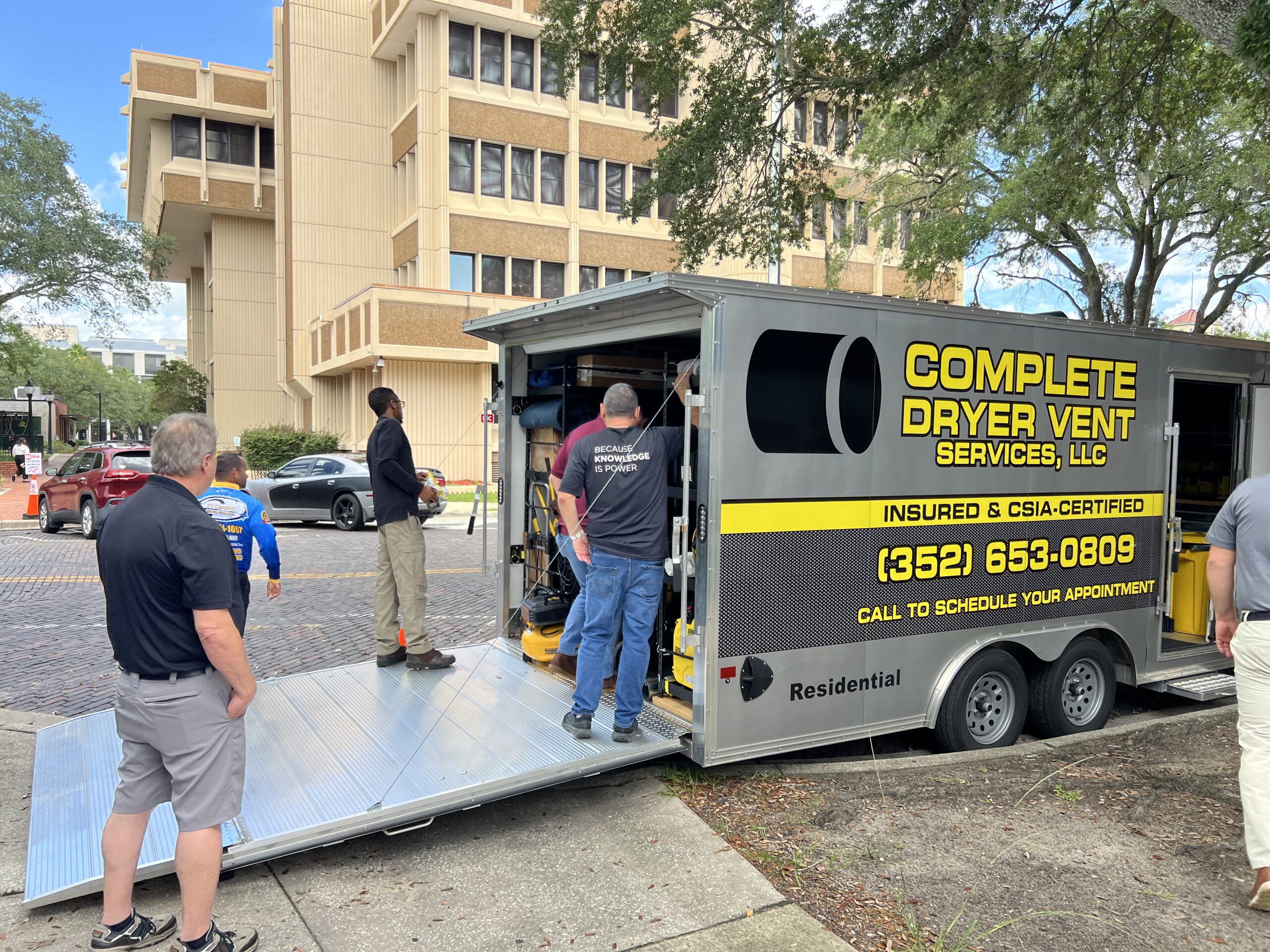
The Hidden Flaw in Paradise: Uncovering Dryer Vent Challenges in The Villages
For residents enjoying the vibrant lifestyle of The Villages, home safety and efficiency are paramount. Yet, a hidden issue often lurks within the walls, posing a significant risk. A proper vent reroute in The Villages FL is often not just an improvement but a critical safety correction. The very design of many modern homes, combined with Florida’s unique climate, can create a perfect storm for hazardous dryer vent conditions.
The Villages Architectural Paradox
The Villages is renowned for its diverse home styles, from charming Villas to spacious Designer Homes. These layouts are designed for comfort, often placing laundry rooms in central interior locations for convenience. However, this creates a conflict with the physics of dryer venting. A dryer must expel hot, moist, lint-filled air completely outside the home via the shortest, straightest path possible. When a laundry room is deep within a home, the vent duct must travel a long, convoluted path through walls or attics to reach an exterior wall or roof. This extended journey increases the risk of lint accumulation and often results in a system that violates the Florida Building Code from the moment of installation.
The Florida Humidity Multiplier
Compounding the architectural challenges is Florida’s persistent high humidity. In our climate, the ambient moisture in the air makes lint particles heavy and sticky. Instead of being blown cleanly out, this damp lint clings to the interior walls of the ductwork, forming dense clogs much faster than in drier regions. This process is especially rapid in systems that are already inefficient—those with long runs and multiple bends common in The Villages.
A Code-Red Situation: Why a Professional Vent Reroute is Non-Negotiable
An improperly routed dryer vent is a serious threat to your home and family. The risks range from catastrophic fires to silent health hazards, all of which underscore why a professional vent reroute in The Villages FL is an essential service.
The Anatomy of a Dryer Fire Hazard
The U.S. Fire Administration (USFA) reports approximately 2,900 home clothes dryer fires annually, with the leading cause being a “failure to clean”. The process begins when a vent duct is too long or has too many bends, restricting airflow and allowing flammable lint to accumulate. As the blockage worsens, the dryer overheats, which can ignite the trapped lint and cause a fire that spreads rapidly through the walls of a home.
Beyond the Flames: The Silent Threats in Your Walls
- Carbon Monoxide (CO) Poisoning: For gas dryers, a blocked vent can force this odorless, deadly gas back into the home.
- Mold and Mildew: Trapped moisture and lint create a breeding ground for mold, which can degrade indoor air quality and trigger respiratory issues.
- Energy Waste and Appliance Damage: A clogged vent forces a dryer to run longer, increasing utility bills and placing excessive strain on the appliance, leading to costly repairs and a shorter lifespan.
A Homeowner’s Diagnostic Checklist: 7 Signs Your Vent is Failing
- Clothes take more than one cycle to dry: A load taking longer than 45-50 minutes indicates restricted airflow.
- The dryer and clothes are excessively hot: This signals an overheating problem due to trapped heat.
- A burning smell is noticeable: A critical warning that lint may be smoldering. Stop use immediately.
- The laundry room feels unusually humid or warm: Moist air is backing up into the room instead of exiting outside.
- The outside vent flap doesn’t open: If the flap remains closed while the dryer is running, there is a significant blockage.
- Excessive lint accumulates behind the dryer: A sign that the exhaust system is backed up.
- It has been over a year since the last inspection: The National Fire Protection Association (NFPA) recommends annual professional inspections.
The Daybook of a CSIA-Certified Technician: The Vent Reroute Process
A professional vent reroute in The Villages FL is a precise, multi-step process. Here is a look at a typical day servicing homes in the community.
The Initial Audit in a “Designer Home”
Our day begins at a Designer home where the owner reports long drying times and a faint burning smell. A digital anemometer confirms exceptionally low airflow at the exterior vent. Tracing the duct’s path reveals a run of nearly 45 feet with four 90-degree bends. This is a clear and dangerous violation of the Florida Building Code, which specifies a maximum length of 35 feet, reduced by 5 feet for each 90-degree bend. The system is fundamentally unsafe and must be rerouted.
The Strategic Blueprint for a “Courtyard Villa”
Next, we visit a Courtyard Villa with a problematic roof termination. The goal is to design a shorter, more direct route to the closest exterior wall, reducing the run from over 30 feet to less than 10. Executing this plan in a block and stucco home requires specialized expertise, including a masonry core drill to create a clean penetration without damaging the structure and meticulous sealing to prevent water intrusion.
Execution with Code-Compliant Precision
With a new route planned, we remove the old, hazardous ductwork. We then install the new system using only rigid, smooth-walled metal ducting, as mandated by the Florida Building Code and NFPA standards. All joints are mechanically fastened and sealed with high-temperature foil tape, and we never use screws that protrude into the airway where they can snag lint. Finally, we install a new exterior vent hood that has a backdraft damper but no screen, as screens are a primary point for lint blockage.
Key Table: The Code Compliance Gap
This table summarizes the critical differences between a professional, code-compliant installation and a common, hazardous one.
Feature | Florida Code-Compliant Standard (FBC M1502) | Common (and Dangerous) Installation Flaw |
| Duct Material | Rigid metal with a smooth interior (0.0157″ min. thickness) | Flammable white plastic, flimsy foil, or ribbed flexible duct concealed in walls. |
| Maximum Length | 35 feet (reduced for each bend) | Excessively long, convoluted runs common in larger Designer homes, often exceeding 50+ feet. |
| Bends/Elbows | Each 90° bend reduces max length by 5 feet. Gradual bends preferred. | Multiple sharp, 90-degree bends creating severe airflow restriction and lint traps. |
| Joints & Fasteners | Mechanically fastened and sealed with foil tape; no screws protruding into the duct. | Joints secured with improper cloth duct tape; sheet metal screws used as lint-catching hooks. |
| Exterior Termination | Must have a backdraft damper; NO screen. Terminates 3+ ft from openings. | Clogged or missing screens, broken flaps, or improper termination into a soffit, attic, or garage. |
Entry 4: Final Commissioning and Verification
The job isn’t finished until we prove it’s done right. We reconnect the dryer and perform a final commissioning test. An anemometer reading at the new exterior vent shows a dramatic improvement in airflow. We provide the homeowner with a detailed service report, including “before” and “after” readings, as tangible proof of the improved safety and performance.
The Decisive Difference: Why a CSIA-Certified Specialist is the Only Choice
When dealing with a failing dryer vent, the choice of provider is critical. A DIY approach or a general handyman often lacks the specialized knowledge of the Florida Building Code and may use non-compliant materials that create a new fire hazard.
The most reliable indicator of a true expert is certification from the Chimney Safety Institute of America (CSIA). A CSIA-Certified Dryer Exhaust Technician has undergone rigorous training on the latest safety codes and technical procedures. Hiring a certified specialist is the only way to guarantee the job will be done correctly, safely, and in full compliance with national and local codes. For more information, visit the Chimney Safety Institute of America (CSIA)
Frequently Asked Questions (FAQs) for Residents of The Villages
My home is made of blocks and stucco. Will a vent reroute damage my exterior?
No. Our certified technicians use specialized masonry core drills to create a clean opening. We then install a professional, weatherproof vent termination that is meticulously sealed to protect your home’s integrity.
How do I know if the vent in my Courtyard Villa is too long?
A key sign is drying times exceeding 45-50 minutes. Due to common layouts, many Villa vents are longer than code recommends. A professional inspection with an airflow measurement is the only way to be certain.
Is the flexible silver hose behind my dryer safe?
The flexible transition hose is acceptable only if it is a single length, no longer than 8 feet, and is not concealed within a wall. We recommend and install UL 2158A-listed flame-resistant ducts for maximum safety.
Can’t I just add a booster fan to my long dryer vent?
No. The Florida Building Code explicitly prohibits domestic booster fans in dryer exhaust systems. They create a concentrated fire hazard by causing lint to accumulate before the fan. The only code-compliant solution is a professional reroute.
How often should I have my new, rerouted vent system inspected?
We recommend an annual professional inspection and cleaning. This is especially important in Florida due to high humidity, which can accelerate lint buildup even in a well-designed system.
Secure Your Home’s Safety and Efficiency Today
For many homeowners in The Villages, an inefficient and hazardous dryer vent is a hidden architectural flaw. A standard cleaning cannot fix a system that is fundamentally too long or improperly installed.
Protecting your home from fire, preventing mold, and ensuring your family’s safety requires a professional, code-compliant vent reroute in The Villages, FL. Don’t wait for a warning sign. Contact Complete Dryer Vent Services today to schedule a professional inspection. For additional safety information, consult resources from the National Fire Protection Association (NFPA)

