
7 Critical Signs You Need Dryer Vent Repair in The Villages, FL
Recognizing the warning signs of a failing dryer vent system is the first step in preventing a disaster. While these symptoms can indicate a clog, they often point to a more serious underlying issue that requires professional dryer vent repair. If you notice any of the following, it’s time to schedule a professional inspection.
- Longer Drying Times: If a load that once took 40 minutes now needs two or three cycles to get dry, it’s a classic sign of severely restricted airflow. This forces your dryer to work harder, wasting energy and stressing its components.
- A Burning Smell: This is a critical red flag. The odor is caused by lint overheating and scorching inside the vent pipe or the dryer itself. If you notice this smell, stop using the dryer immediately and call a professional.
- The Dryer is Hot to the Touch: An excessively hot exterior means heat is not venting properly and is building up inside the appliance. This can damage sensitive electronic components and lead to premature failure.
- Visible Lint Around the Exterior Vent: If you see lint and debris collected around the vent flap on the outside of your home, it’s a definitive sign that the system is backed up and failing to exhaust properly.
- Damp or Musty-Smelling Clothes: When moist air can’t escape, it remains in the dryer drum, leaving clothes feeling damp and smelling like mildew even after a full cycle.
- The Vent Hood Flap Doesn’t Open: While the dryer is running, the airflow should be strong enough to push open the flap on the exterior vent. If it stays closed or barely moves, it indicates a severe blockage or a crushed line.
- It’s Been Over a Year Since Inspection: The National Fire Protection Association (NFPA) and the US Fire Administration recommend that dryer vents be professionally inspected and cleaned at least once a year to prevent the dangerous accumulation of lint. An inspection can reveal hidden damage that requires repair.
Beyond the Clog: Common Dryer Vent Failures and Code Violations
Often, a recurring clog is merely a symptom of a larger problem. A professional inspection frequently reveals that the vent system itself is damaged, improperly installed, or made of hazardous materials—all of which require a dryer vent repair to ensure safety and compliance with building codes.
Hazardous Materials: The Dangers of Plastic and Foil
One of the most common and dangerous issues is the use of improper materials. Flexible plastic or foil accordion-style ducts are highly flammable and explicitly forbidden by most building codes and all dryer manufacturers. These materials can trap lint in their ridges, are easily crushed, and can melt or ignite from the high temperatures of the dryer exhaust. A professional dryer vent repair involves replacing these hazardous materials with rigid metal ducting that meets safety standards.
Crushed or Disconnected Ducts
It is very common for the duct to become crushed or disconnected behind the dryer when the appliance is pushed back against the wall. A crushed duct severely restricts airflow, leading to rapid lint buildup and overheating. A disconnected duct is even more dangerous, as it vents hot, moist, lint-filled air directly into your wall cavity or laundry room, creating a severe fire hazard and a breeding ground for mold.
Improper Vent Length and Bends
The home designs in The Villages, particularly in villas with interior laundry rooms, often feature long and complex vent paths that run through attics or walls. According to the ICC Digital Codes, a dryer vent duct should not exceed a total length of 35 feet. This maximum length is reduced by 5 feet for every 90-degree bend and 2.5 feet for every 45-degree bend. A system that exceeds these limits will not have enough airflow to properly expel lint, leading to inevitable clogs. In these cases, a dryer vent repair may involve a full dryer vent rerouting to create a shorter, more efficient path.
Incorrect Termination
A dryer vent must terminate outside the building at a point where it is not obstructed. Terminating a vent in an attic, garage, or crawlspace is a serious code violation that can fill your home with moisture and flammable lint. Furthermore, the termination point must not have a screen, as screens trap lint and create a blockage. If your system has any of these issues, a repair is necessary to bring it into compliance and ensure safety.
The Florida Factor: How Humidity and Pests Compound Vent Problems
Florida’s unique climate adds another layer of risk to a faulty dryer vent system. The high humidity and active wildlife can turn a minor issue into a major hazard.
- Mold and Mildew: Florida’s high humidity means that the moisture trapped in a damaged or clogged vent never truly dries out. This creates a dark, damp environment that is a perfect breeding ground for mold and mildew. These spores can then be pushed back into your home, degrading your indoor air quality and triggering respiratory issues, allergies, and asthma. According to the EPA, controlling moisture is the key to controlling mold. A proper dryer vent repair ensures moisture is vented outside, eliminating this health risk.
- Pests and Nests: A damaged exterior vent cover can be an open invitation for birds, rodents, and other pests to build nests inside your ductwork. These nests create dense blockages that completely stop airflow, causing the dryer to overheat rapidly and creating a serious fire hazard.
The Professional Repair Process: More Than Just a Quick Fix
A professional dryer vent repair in The Villages, FL is a comprehensive service designed to diagnose and permanently fix the root cause of the problem. Unlike a simple cleaning, a repair addresses the structural integrity and code compliance of the entire system.
At Complete Dryer Vent, our CSIA Certified vent cleaning follow a meticulous process:
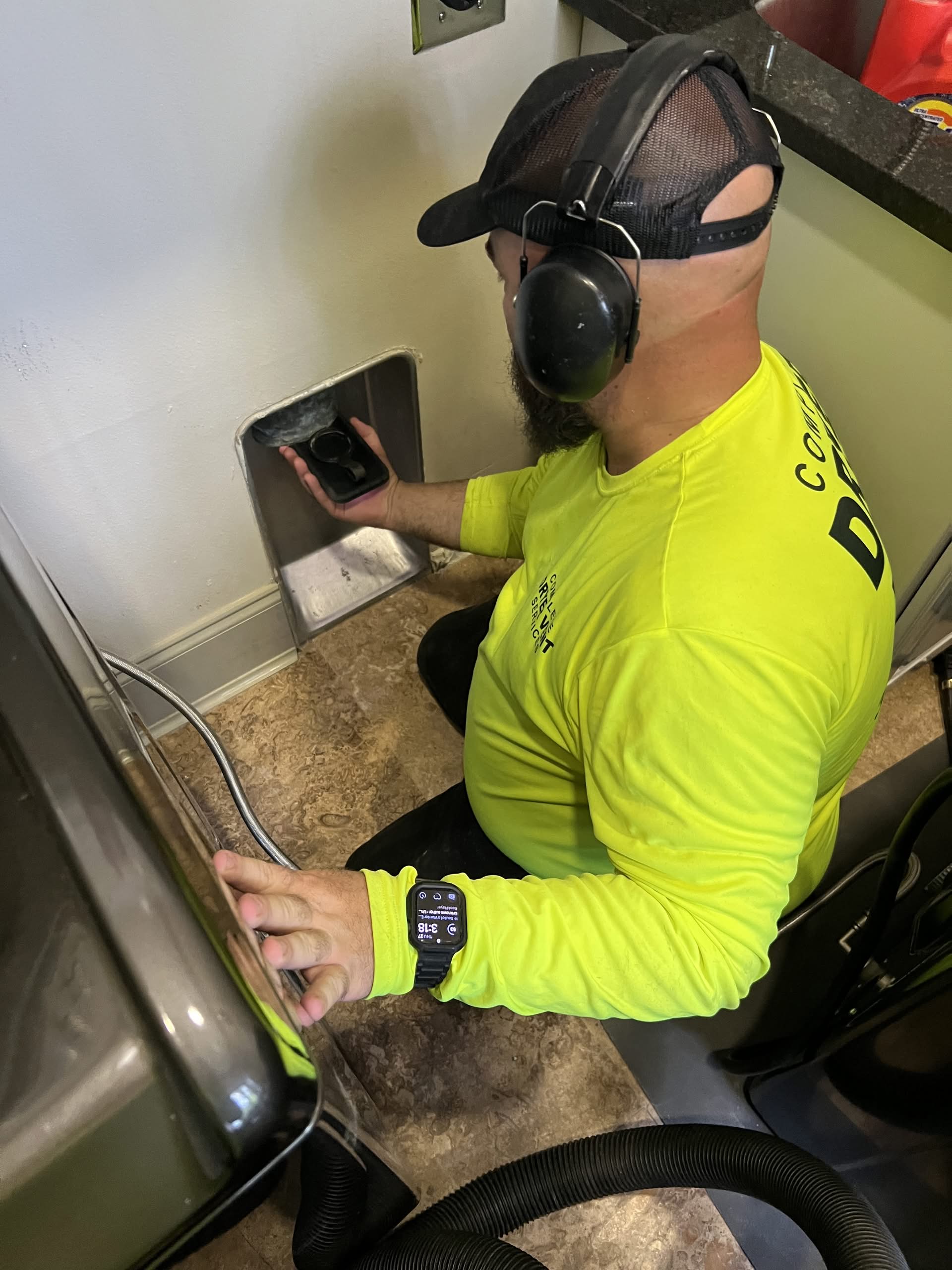
- Diagnostic Inspection: The process begins with a full system inspection to identify the problem. We use tools like an anemometer to measure airflow and, when necessary, a borescope camera to look inside the ductwork to find crushed sections, disconnections, or blockages.
- Problem Assessment: Once the issue is identified, we explain the problem to you, showing you photos of the damage. We discuss the available solutions, whether it’s replacing a section of duct, repairing a joint, or recommending a full dryer vent rerouting for a non-compliant system.
- Code-Compliant Repair: All repairs are performed using materials that meet or exceed building codes. This includes replacing flammable plastic or foil ducts with rigid metal ducting and using proper UL-listed metal tape to seal joints—never duct tape, which can dry out and fail.
- System Verification: After the repair is complete, we perform another airflow test to provide scientific verification that the system is now operating safely and efficiently. This data, along with after-repair photos, is included in your final service report.
The Dangers of DIY: Why Professional Dryer Vent Repair is Essential
While a simple cleaning might seem like a manageable DIY task, dryer vent repair should always be left to certified professionals. The risks associated with an improper repair are significant.
- Code Violations: An amateur repair may not comply with the strict standards of the ICC Digital Codes, leaving your home unsafe and potentially creating issues with insurance claims.
- Using Incorrect Materials: Many DIYers unknowingly use flammable foil or plastic ducts, or use duct tape for sealing, which are all serious fire hazards.
- Making the Problem Worse: An improper repair can create new areas for lint to get trapped or fail to address the underlying issue, leading to recurring clogs and continued risk.
The Complete Dryer Vent Promise: Your Certified Partner
We have built our business on the principles of a framework championed by industry leaders like Google to identify helpful, people-first service.
- Experience: We have serviced thousands of homes in Central Florida and are intimately familiar with the unique construction styles and vent configurations found in The Villages.
- Expertise: Our technicians are CSIA Certificate, the highest credential in the industry. They have passed rigorous exams on NFPA standards, building codes, and the technical aspects of venting systems.
- Authoritativeness: We are a fully licensed and insured company in Florida, and all our repairs and installations are compliant with the Florida Building Code and NFPA 211 standards.
- Trustworthiness: We believe in complete transparency. Every service includes detailed before-and-after photos and airflow readings at no extra charge, so you have visual proof that your home is safer. We provide honest recommendations and never use subcontractors.
Frequently Asked Questions (FAQs) About Dryer Vent Repair
- How is a dryer vent repair different from a cleaning? A cleaning removes lint and debris from a functional vent system. A repair addresses physical damage, such as crushed or disconnected ducts, replaces unsafe materials like plastic or foil, or corrects an improper installation that violates building codes.
- How much does a dryer vent repair in The Villages, FL typically cost? The cost varies depending on the extent of the damage and the accessibility of the vent line. A simple repair like replacing a transition duct may cost between $150-$300, while a more complex job like a full reroute can be more. We provide a detailed quote after a thorough inspection.
- What materials should my dryer vent be made of? According to the Florida Building Code, dryer vent ducts must be constructed of smooth interior metal with a minimum thickness of 0.016 inches and a 4-inch diameter. Flammable, flexible plastic or foil accordion-style ducts are not code-compliant and are a fire hazard.
- How long does a dryer vent repair take? Most standard repairs can be completed in 1 to 3 hours. A full rerouting of the vent line may take longer, typically 3 to 5 hours, depending on the complexity of the new path.
- Do I need a permit for a dryer vent repair or reroute? Minor repairs typically do not require a permit. However, a full rerouting that involves creating a new termination point on an exterior wall or roof may require a permit from your local building department. As part of our service, we handle all necessary permitting to ensure your project is fully compliant.
Don’t wait for a warning sign to become a tragedy. A damaged or improperly installed dryer vent is a risk that’s not worth taking. Protect your home, your health, and your peace of mind.
Call Complete Dryer Vent today at (352) 653-0809 or click here to book your service online to schedule your professional dryer vent repair in The Villages, FL.

