
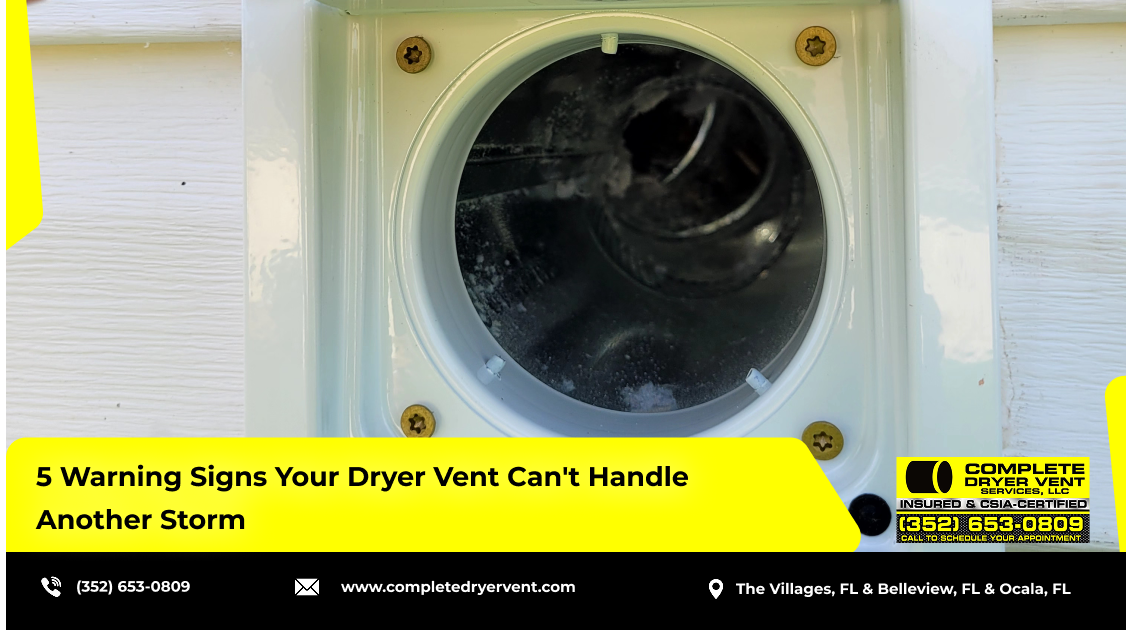
Living in Central Florida means accepting that another storm is always possible, even late in the season. But while you’re checking roof shingles and clearing gutters, there’s one critical system that often goes unchecked: your dryer vent. A compromised vent can turn dangerous quickly when storms hit, creating fire hazards and costly damage.
Complete Dryer Vent Service has inspected thousands of storm-damaged vents across Ocala, The Villages, and surrounding communities. We’ve identified five clear warning signs that indicate your dryer vent won’t survive another storm intact. Recognizing these signs now can prevent emergency repairs and dangerous situations later.
1. Your Exterior Vent Cover Is Already Damaged
The exterior vent cover is your first line of defense against storm intrusion. Check for:
- Cracks or missing pieces from previous storms
- Loose or bent flaps that don’t close properly
- Rust weakening the metal structure
- Gaps between the cover and wall
A damaged cover allows rain, debris, and even small animals to enter your vent system. During the next storm, these existing weak points will fail completely, potentially flooding your vent with water or blocking it entirely with debris.
2. Visible Disconnection or Sagging in Accessible Vent Sections
If you can see any portion of your dryer vent (in the laundry room, garage, or attic), look for:
- Separated joints where duct sections meet
- Sagging areas where water might collect
- Duct tape repairs that are peeling or failing
- Flexible ducts that have compressed or kinked
These issues worsen dramatically during storms. Wind vibrations can complete partial separations, while heavy rain adds weight to sagging sections, potentially causing complete collapse.
3. Your Dryer Already Struggles on Calm Days
Pre-storm performance problems indicate a system that can’t handle additional stress:
- Extended drying times suggest restricted airflow
- Hot dryer exterior means heat isn’t venting properly
- Shutoff mid-cycle indicates safety sensors detecting problems
- Lint around the dryer shows backdraft issues
A vent system already operating at reduced capacity will likely fail when storm conditions add pressure changes, moisture, and debris to the mix.
4. Water Stains or Rust Near Your Vent Path
Evidence of previous water intrusion means your system is vulnerable:
- Ceiling stains below vent runs
- Rust streaks on exterior walls
- Peeling paint near interior vent connections
- Musty odors in the laundry room
These signs indicate that water has already found a way into your vent system. The next storm will follow the same path but with potentially catastrophic results.
5. It’s Been Over a Year Since Professional Inspection
Even without visible problems, annual wear makes vents vulnerable:
- Lint accumulation reduces system resilience
- Gradual connection loosening from vibration
- Deteriorating seals at roof or wall penetrations
- Unnoticed animal damage creating weak points
A vent that hasn’t been professionally inspected can’t be trusted to withstand storm conditions, even if it appears functional.
Why Storm-Damaged Vents Are So Dangerous
When storms compromise dryer vents, multiple hazards emerge:
Immediate Risks:
- Water entering the home through vent openings
- Complete blockage preventing dryer use
- Electrical hazards from water reaching the dryer
- Carbon monoxide backup in gas dryers
Long-term Dangers:
- Compressed wet lint becoming fire fuel as it dries
- Structural damage from water intrusion
- Drastically reduced dryer efficiency
- Expensive emergency repairs
Pre-Storm Solutions from Complete Dryer Vent Service
Don’t wait for storm damage to force expensive emergency repairs. Our pre-storm services include:
Professional Inspection: We identify vulnerabilities before they become failures, checking your entire system from dryer to exterior.
Preventive Repairs: Securing loose connections, replacing damaged covers, and reinforcing weak points that storms would exploit.
Complete Cleaning: Removing lint buildup that becomes dangerous when mixed with storm moisture.
Code-Compliant Upgrades: Replacing outdated flexible ducts with rigid metal systems that better withstand storm conditions.
Take Action Before the Next Storm
If your vent shows any warning signs, schedule service immediately. Storm season isn’t over, and prepared vents mean:
- No emergency repair costs
- Continuous dryer availability
- Protected home structure
- Peace of mind during storms
Storm-Ready Dryer Vent Services Across Central Florida
Complete Dryer Vent Service provides storm preparation services throughout Central Florida, including The Villages, Ocala, Leesburg, Lady Lake, Clermont, Summerfield, Belleview, Wildwood, Fruitland Park, Tavares, Eustis, Mount Dora, Dunnellon, and Inverness.
FAQs
How do storms damage dryer vents? High winds loosen connections and damage exterior covers, while rain enters through compromised areas, creating blockages and water damage.
Can I storm-proof my vent myself? Basic maintenance helps, but professional inspection identifies hidden vulnerabilities and ensures proper repairs that meet building codes.
Should I use my dryer during a storm? No. Storm pressure changes can cause backdraft, and compromised vents may allow water into your dryer, creating electrical hazards.
How long do vent repairs take? Most repairs complete in 1-2 hours. Full vent replacement typically takes 2-4 hours depending on system complexity.
Don’t let your dryer vent become a storm casualty. Contact Complete Dryer Vent Service today for professional inspection and storm preparation. Protect your home before the next storm arrives.

